
When it comes to turkey burger patties, I’ve learned that texture is everything. It’s not just about the flavor, though that’s important too; it’s about how the patty feels when you bite into it—juicy, tender, with just enough firmness to hold together without feeling dense or rubbery.
I used to struggle with dry, crumbly turkey burgers until I started paying attention to the feel of the mixture. A little bread crumb, some finely chopped onion, and a gentle hand shaping them make all the difference. It’s a simple recipe, but mastering the texture takes patience and a bit of intuition, like getting to know a new friend.
This recipe has become my go-to because it’s forgiving and adaptable. Whether I’m grilling outside or pan-frying on the stove, I know I’ll end up with a patty that’s juicy and satisfying, not falling apart or tasting like cardboard. It’s a small victory every time I get that perfect bounce and bite.
Focusing on the importance of texture in turkey burger patties, this recipe explores how different binders and cooking techniques can transform lean turkey into a juicy, flavorful patty that doesn’t fall apart. It’s about understanding the feel of the mixture and mastering the gentle handling required to keep these burgers tender and satisfying.
Texture as the Secret
- Cooking these turkey patties reminds me how simple ingredients can be turned into something special with a bit of care.
- I love the chaos of shaping the patties—each one a little different, but all holding that promise of juicy meat inside.
- Finding the perfect seasoning balance in this recipe always brings a quiet pride, especially when my kids finish their plates.
- There’s a nostalgic comfort in the smell of seasoned turkey filling the kitchen, like a warm hug from childhood.
The story behind this recipe
- This recipe started from a simple need—something juicy and satisfying, but lean enough to keep me feeling good after. I was tired of turkey burgers that tasted bland or dried out, so I experimented with how gentle handling and specific binders could change that. It’s funny how a small tweak, like adding a bit of grated zucchini or a splash of lemon juice, can really brighten the flavor and texture.
- One evening, I remembered how my grandmother used to make meat patties with whatever she had on hand—never fancy, just honest, hearty bites. That nostalgia pushed me to keep refining, aiming for a burger that’s not just healthy but feels like a treat. Now, I rely on this approach when I want something quick, nourishing, and genuinely flavorful—no fuss, just good, honest cooking.
- heading: “The story behind this recipe”
Trivia and historical tidbits
- Turkey burgers gained popularity in the mid-20th century as a leaner alternative to beef, especially during health-conscious waves.
- The idea of ground poultry dates back centuries, but modern turkey patties became a staple in American kitchens around the 1950s.
- In some regions, turkey burgers are linked to seasonal celebrations, especially around Thanksgiving, reimagined as a year-round option.
- Chefs and home cooks alike have long experimented with various binders—like oats, breadcrumbs, or even grated vegetables—to improve texture.
- This recipe’s focus on texture is a nod to traditional meatball-making techniques, emphasizing gentle handling and proper seasoning.
Key ingredients and tips
- Ground turkey: I look for 93% lean—less fat means leaner burger, but watch out for dryness. Your turn to find that balance.
- Breadcrumbs: I use plain, unseasoned breadcrumbs to help bind and keep moisture in. If you want gluten-free, try crushed rice crackers for a light crunch.
- Onion: Finely chopped onion adds moisture and sweetness. Go for yellow or white; if you’re out, grated zucchini works wonders and keeps things juicy.
- Egg: A beaten egg acts as a binder—don’t skip it, especially if your mixture feels loose. For a vegan tweak, try flaxseed mixed with water.
- Herbs & spices: I love a dash of smoked paprika and black pepper. Fresh herbs brighten up the flavor; dried ones work in a pinch but are less vibrant.
- Salt: Proper seasoning is key. I prefer kosher salt; too much can toughen the meat, so start small and adjust at the end.
- Olive oil: A little for cooking, it adds richness and helps with that beautiful sizzle. If you’re pan-frying, a splash of neutral oil works too.
Spotlight on key ingredients
Ground turkey:
- I hunt for 93% lean—less fat, but keep an eye on moisture. Your turn to find that perfect balance.
- Breadcrumbs: I prefer plain, unseasoned ones to help bind without overwhelming. For gluten-free, crushed rice crackers work just as well.
- Onion: Finely chopped for moisture and sweetness. If out, grated zucchini keeps things juicy and adds a subtle crunch.
Herbs & spices:
- Egg: It’s the glue—whisked up, it keeps everything together. For vegan, try flaxseed mixed with water, but it’s a different feel.
- Smoked paprika and black pepper bring depth. Fresh herbs like parsley brighten, but dried save space and still work.
- Olive oil: A splash for cooking—helps with that sizzle and prevents sticking. Neutral oil works too if you want a milder flavor.
Notes for ingredient swaps
- Dairy-Free: Skip cheese or milk-based binders; use mashed avocado for creaminess and moisture, adding a subtle richness without dairy.
- Gluten-Free: Replace breadcrumbs with crushed almonds or gluten-free oats; keep texture but watch for slight nutty flavor.
- Low-Sodium: Use unsalted or lightly salted seasoning; enhance flavor with herbs and citrus zest instead of salt.
- Vegetarian: Swap ground turkey for lentil or mushroom mixture; add a touch more binding agent like flaxseed to hold together.
- Spice Level: Omit or reduce chili powder for milder taste; add smoked paprika for depth without heat, if preferred.
- Herb Variations: Use fresh parsley or cilantro instead of dried; they add brightness but require chopping and gentle folding.
- Oil for Cooking: Use avocado oil or coconut oil for different flavor profiles; both handle high heat well without smoking.
Equipment & Tools
- Large mixing bowl: For combining ingredients gently.
- Frying pan or grill: To cook the patties evenly.
- Spatula: For flipping and handling the patties.
- Thermometer: To check internal doneness.
Step-by-step guide to turkey patties
- Gather your equipment: a large mixing bowl, a frying pan or grill, a spatula, and a thermometer. The bowl for mixing, the pan for cooking, the spatula for flipping, and the thermometer to check doneness.
- In the bowl, combine 1 pound of ground turkey, 1/4 cup breadcrumbs, 1 beaten egg, 1/4 cup finely chopped onion, 1 teaspoon salt, and 1/2 teaspoon black pepper. Mix gently but thoroughly—avoid overworking the meat to keep the patties tender.
- Divide the mixture into 4 equal portions. Gently shape each into a patty about 1 inch thick, handling as little as possible to keep them juicy and intact.
- Preheat your pan or grill over medium heat, about 160°C (320°F). When hot, add a splash of olive oil or neutral oil. The oil should shimmer but not smoke.
- Place the patties in the pan, spacing them out. Cook for about 6-7 minutes on the first side, until the edges are golden and the underside forms a crust. Flip carefully to avoid breaking.
- Cook the other side for another 6-7 minutes, pressing lightly with a spatula. Check the internal temperature; it should reach 74°C (165°F). The patties should be firm but still have some bounce.
- If the patties brown too quickly and aren’t cooked through, reduce heat to medium-low and cover the pan briefly to trap heat. If they look pale, increase heat slightly and cook a minute longer.
- Remove the patties from heat and let rest for 3 minutes. Resting helps juices redistribute, keeping the burger moist and flavorful.
- Serve hot on buns, with your favorite toppings. The surface should be crisp, with a juicy interior that’s not dry or crumbly, ready to bite into.
Let the patties rest on a plate for 3 minutes before serving. This keeps them juicy, allowing juices to settle. Serve immediately with buns or on a plate alongside your favorite sides.
How to Know It’s Done
- Internal temperature reaches 74°C (165°F).
- Surface is golden and slightly crisp.
- Patty feels firm but has some bounce when pressed.
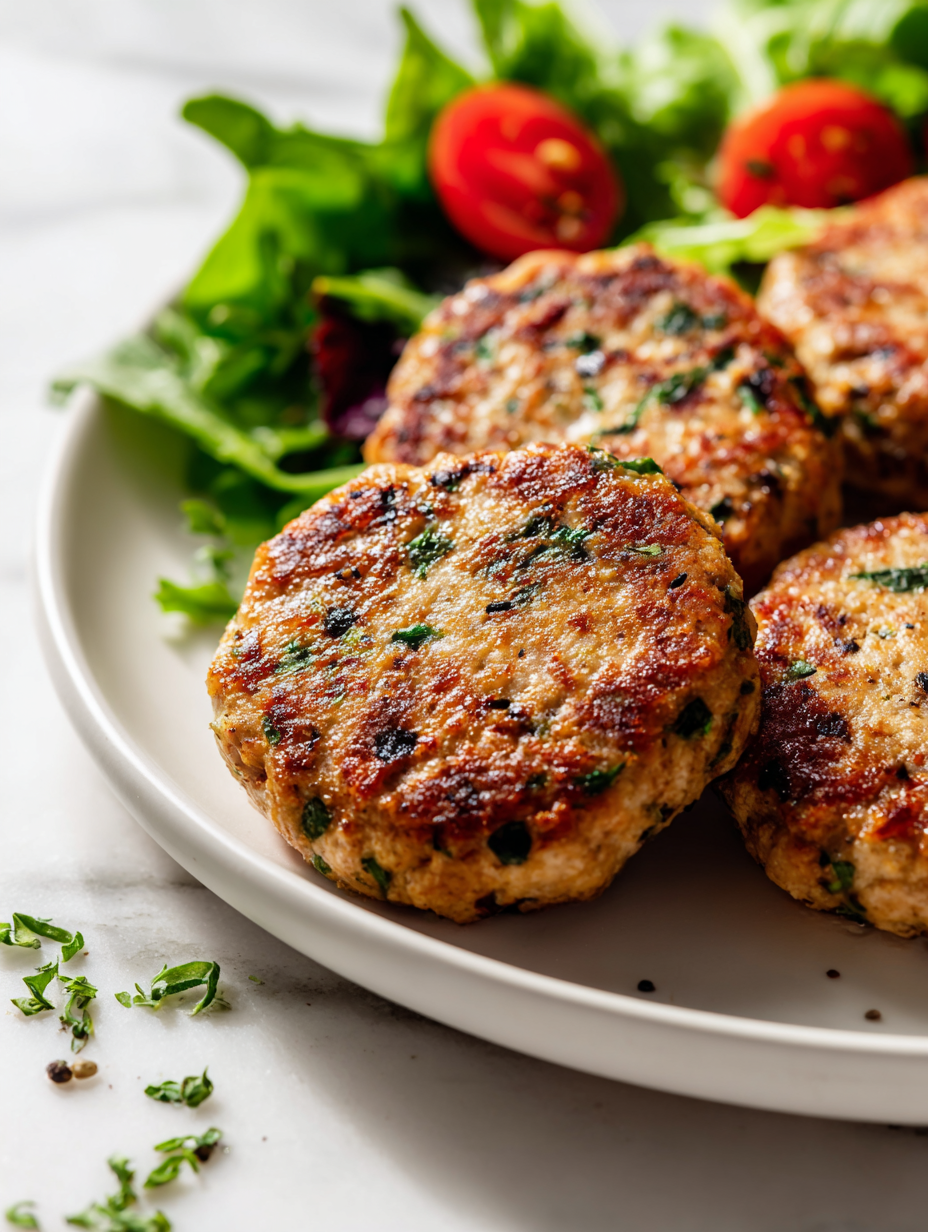
Juicy Turkey Burger Patties
Ingredients
Equipment
Method
- Gather your equipment: a large mixing bowl, a frying pan or grill, a spatula, and a thermometer. Set everything within reach for smooth assembly and cooking.
- Add the ground turkey to your bowl, then sprinkle in the breadcrumbs, beaten egg, finely chopped onion, salt, and black pepper. Mix everything gently with your hands or a spoon until just combined—avoid overworking to keep the patties tender.
- Divide the mixture into four equal portions. Lightly shape each into a patty about 1 inch thick, handling as little as possible to maintain juiciness and prevent dense packing.
- Preheat your pan or grill over medium heat, around 160°C (320°F). Add a tablespoon of olive oil, letting it shimmer to indicate readiness.
- Carefully place the patties in the hot pan, spacing them apart. Sear for about 6-7 minutes, until the edges turn golden and develop a slight crust.
- Flip the patties gently with a spatula, cooking the second side for another 6-7 minutes. Press lightly to encourage even contact with the pan, and check that the surface is golden brown.
- Use a thermometer to verify doneness; the internal temperature should reach 74°C (165°F). If needed, lower heat and cover with a lid to finish cooking without burning the exterior.
- Remove the patties from the heat and let them rest for about 3 minutes on a plate. Resting helps retain juices and keeps the patties moist inside.
- Finally, serve the patties hot on buns with your favorite toppings or as a main with sides, enjoying their juicy, tender texture that holds together beautifully.
Notes
Pro tips for perfect turkey patties
- Keep the mixture cold before shaping; it helps maintain moisture and prevents sticking.
- Handle the meat mixture gently to avoid compacting; this keeps the patties tender and juicy.
- Use a hot pan or grill—160°C (320°F)—to get that initial sizzle and a golden crust.
- Flip the patties when the edges turn firm and golden—usually after 6-7 minutes—avoid flipping too early.
- Check for doneness with a thermometer—74°C (165°F)—the meat should be firm but still juicy.
- Rest the patties for 3 minutes after cooking; this redistributes juices and keeps them moist.
- If the patties brown too quickly and aren’t cooked through, reduce heat and cover briefly to finish.
Common mistakes and how to fix them
- FORGOT to keep the mixture cold; fix by chilling before shaping.
- DUMPED too much binder; fix by adding more turkey or a splash of water.
- OVER-TORCHED the patties; fix by lowering heat and flipping sooner.
- USED the wrong pan size; fix with a larger or non-stick skillet for even cooking.
Quick fixes and pantry swaps
- When mixture feels too loose, splash in a little more breadcrumbs to tighten binding.
- If patties stick to the pan, splash with more oil or use a non-stick skillet.
- When patties turn gray before browning, increase heat slightly for better sear.
- Splash with lemon juice if turkey tastes flat; the bright acidity enhances flavor.
- Patch over cracks with extra mixture if they break during flipping—gentle handling is key.
Prep, store, and reheat tips
- Mix the turkey with seasonings and shape the patties a day ahead; keep them covered in the fridge for up to 24 hours. The flavors meld and the texture firms up slightly, making grilling easier.
- Store cooked patties in an airtight container in the fridge for up to 3 days. Reheat gently in a skillet over medium-low heat until warmed through, looking for a slight shimmer and juicy surface.
- For longer storage, freeze the uncooked or cooked patties for up to 3 months. Wrap tightly to prevent freezer burn; thaw in the fridge overnight before reheating or cooking.
- Reheating frozen patties? Pan-fry from frozen over medium heat, about 8-10 minutes, until steaming hot and the surface is crisp and golden. Avoid overcooking to prevent dryness.
- The flavor might intensify slightly after resting in the fridge, so taste and adjust seasoning before reheating if needed. The texture stays tender if reheated gently.
Top questions about turkey burger patties
1. How do I prevent turkey burgers from drying out?
To keep turkey patties juicy, don’t overmix the ingredients and handle the mixture gently. Adding a little grated zucchini or a splash of broth helps retain moisture, making each bite tender and flavorful.
2. How can I tell when my turkey patties are cooked?
Use an instant-read thermometer to check for 74°C (165°F) internal temperature. When the outside is golden and the texture feels firm yet springy, they’re ready to eat.
3. How should I shape my turkey burger patties?
Shape the patties gently to avoid compacting the meat. Keep the mixture cold before shaping, and don’t press down too hard when forming them. This keeps the inside juicy and tender.
4. What’s the best heat level for cooking turkey patties?
Use medium heat—about 160°C (320°F)—to get a good sear without burning. If they brown too quickly, lower the heat and cover the pan to finish cooking through.
5. Can I prepare turkey burger patties ahead of time?
Yes, you can freeze uncooked patties for up to 3 months. Wrap them tightly and thaw in the fridge overnight before cooking for best texture and flavor.
6. What if my patties fall apart during cooking?
For a quick fix, if the patties fall apart, add a little more binder like egg or breadcrumbs. If they stick, splash with a bit more oil or switch to a non-stick skillet.
7. How can I boost flavor in turkey patties?
Use fresh herbs like parsley or cilantro for brightness. Dried herbs are fine but less vibrant. For a smoky flavor, add smoked paprika or chipotle powder.
8. How should I handle the mixture for best results?
Handle the mixture lightly and chill it before shaping. Resting the formed patties in the fridge for 15 minutes helps them hold together during cooking.
9. How do I avoid burning the patties?
If the patties brown too quickly and aren’t cooked through, reduce the heat and cover the pan. This traps heat and ensures even cooking without burning the surface.
10. How do I reheat turkey burger patties?
Reheat cooked patties in a skillet over medium-low heat until steaming hot and the surface is crisp. Covering lightly helps re-crisp the outside while keeping the inside moist.
Focusing on the texture of these turkey burger patties reminds me how small details make a big difference. The gentle handling, the right binder, and the careful cooking all come together in that perfect bite—juicy, tender, with a satisfying crust.
In times when quick, nourishing meals are a must, this recipe offers a straightforward approach that never sacrifices flavor or texture. It’s honest home cooking, made better by paying attention to the feel and the process, not just the end result.
