
Blackened salmon isn’t just about the heat or the spice—it’s about that first crackle as the crust hits the hot pan, releasing a smoky aroma that fills the kitchen. I love how the spices stick to the fish, creating a crust that’s both fiery and peppery, yet perfectly balanced with the richness of the salmon. This recipe is my go-to when I want something bold but straightforward, with a technique that’s forgiving even if you’re new to spice rubs.
What makes this blackened version stand out is the texture. The crust should be dark but not burnt, smoky but not bitter. I’ve tweaked my spice blend over years—adding just enough cayenne for heat, but not so much that it overpowers the natural sweetness of the salmon. It’s a dance of heat, spice, and patience, and when it all comes together, you get a piece of fish that’s as satisfying to look at as it is to eat.
Focusing on the smoky, peppery crust that transforms simple salmon into a flavor-packed centerpiece, highlighting the importance of technique and spice balance.
The spice crust that transforms
- The first time I got that perfect smoky crust, I felt like a wizard in the kitchen.
- Honestly, I used to shy away from spice, but this recipe’s balance made me fall in love with bold flavors.
- There’s something deeply satisfying about hearing that crackle as the salmon hits the pan, like a small victory every time.
- This dish reminds me of summer cookouts, but it’s just as good on a cold weekday when I need a little fiery comfort.
The story behind this recipe
This recipe came together on a night when I was experimenting with spice blends, trying to mimic that smoky, peppery crust I’d loved from a seaside grill. I realized that the key was in the seasoning mix and the hot cast-iron pan, which creates that instant crackle and sear. It’s become my go-to for quick, impressive dinners that bring a bit of coastal smoky charm to the table. Each time I cook it, I remember the thrill of mastering that perfect crust, and I keep tweaking the spice balance to keep it just right.
Trivia and origins
- Blackened cooking originated in the Gulf Coast, blending Native American, French, and Caribbean spices.
- The technique was popularized in the 1980s by Chef Paul Prudhomme, who brought it to national attention.
- The intense spice rub was initially used to mask less fresh fish, but evolved into a flavorful crust.
- Traditionally, blackening involves searing fish in a very hot cast-iron skillet until charred and aromatic.
- The bold, smoky flavor profile was inspired by Cajun and Creole culinary traditions.
Key ingredients’ secrets
- Paprika: I love using smoked paprika for that deep, smoky aroma—skip if you prefer a milder flavor, but it really makes the crust pop.
- Cayenne pepper: Just a pinch gives it fiery heat; if you want more kick, add a little extra, but watch your smoke point in the pan.
- Black pepper: Freshly cracked is best—its sharp bite complements the smoky spices, so don’t skimp on grinding right before mixing.
- Salt: I use coarse sea salt to help draw out moisture and create a better crust—less salt if you’re watching sodium intake, but it cuts through the spice nicely.
- Herbs (optional): A dash of thyme or oregano adds a subtle earthiness—use dried if fresh isn’t on hand, but fresh herbs give a brighter note.
- Oil (for searing): I prefer neutral oil with a high smoke point, like grapeseed or canola—if using butter, add it later for flavor, but it burns faster.
- Lemon (for serving): Brightens the smoky crust with a zesty splash—skip if you prefer a purely spicy punch, but it balances richness beautifully.
Spotlight on key ingredients
Paprika:
- I love using smoked paprika for that deep, smoky aroma—skip if you prefer a milder flavor, but it really makes the crust pop.
- Cayenne pepper: Just a pinch gives it fiery heat; if you want more kick, add a little extra, but watch your smoke point in the pan.
- Black pepper: Freshly cracked is best—its sharp bite complements the smoky spices, so don’t skimp on grinding right before mixing.
Cayenne pepper:
- Cayenne: That tiny red speck adds serious heat—shake a little more if you like it fiery, but be cautious of burning the spices too fast.
- Black pepper: Freshly cracked, it’s sharp and pungent—crack it right before mixing for maximum bite and aroma.
- Lemon zest: Brightens the crust with zesty, aromatic oils—use fresh for a more vibrant punch that awakens the smoky flavors.
Notes for ingredient swaps
- Dairy-Free: Omit butter or cream-based sauces; focus on spice and acidity for flavor. The dish remains vibrant without dairy’s richness.
- Low-Sodium: Reduce salt in the spice rub and use salt-free seasoning mixes. The crust will be less salty but still flavorful.
- Gluten-Free: Ensure your spice blend is free from any additives or anti-caking agents containing gluten. The smoky crust stays just as delicious.
- Vegan: Use smoked paprika, chili powder, and herbs for a plant-based spice crust. Skip the fish and try hearty vegetables or tofu instead.
- Spice Level: Add extra cayenne or chili powder if you want more heat, but keep an eye on the smoke point to avoid burning the spices.
- Oil Choice: Swap grapeseed or canola for coconut oil for a slightly sweeter, nutty aroma—just watch the smoke point during searing.
- Lemon: Substitute with lime or vinegar if citrus isn’t your thing—your crust will still have a lively, tangy punch.
Equipment & Tools
- Cast-iron skillet: For achieving a smoky, even sear with a crisp crust.
- Spoon: To spread or press the spice rub onto the fish.
- Spatula: To flip the fish gently without breaking the fillet.
- Meat thermometer: To monitor internal temperature for perfect doneness.
Step-by-step guide to blackened salmon
- Gather your equipment: a heavy cast-iron skillet, a spoon for spreading, a spatula, and a meat thermometer. Preheat the skillet over medium-high heat until it’s shimmering, about 3-4 minutes. Pat dry the salmon fillets, about 170g (6 oz) each, ensuring no excess moisture so the crust sticks well.
- Mix your spice rub: combine 1 tbsp smoked paprika, 1 tsp cayenne, 1 tsp black pepper, 1 tsp sea salt, and ½ tsp dried thyme if using. Stir until evenly blended. This will be your smoky, peppery crust.
- Coat the salmon: brush each fillet lightly with a high-smoke point oil (like grapeseed). Then, press the spice mixture onto all sides of the fish, ensuring an even, thick coating. Don’t skimp—this is the crust’s foundation.
- Sear the fish: place the fillets in the hot skillet, skin-side down if skin-on, pressing down gently with a spatula for 10 seconds. Cook for 3-4 minutes until the crust is darkened and aromatic, hearing a crackling sound. Flip carefully, cook for another 2-3 minutes, aiming for an internal temperature of 52°C (125°F).
- Check doneness: the crust should be blackened but not burnt, and the fish should flake easily when tested with a fork. If the crust looks too charred before the fish is cooked, reduce heat slightly and cook longer, or remove early and finish in the oven at 180°C (350°F) if needed.
- Rest the fish: transfer to a plate and let it rest for 2 minutes. This helps the juices redistribute and keeps the crust crisp. Squeeze fresh lemon over just before serving to add brightness.
- Plate and enjoy: serve immediately with your favorite sides—perhaps a fresh green salad or roasted veggies. The smoky crust, tender flesh, and a squeeze of lemon make each bite memorable.
Transfer the cooked salmon to a plate, squeeze fresh lemon over, and let it rest for 2 minutes to lock in juices. Serve immediately to enjoy the crust’s smoky aroma and tender flesh.
How to Know It’s Done
- Crust is dark, aromatic, and slightly charred but not burnt.
- Internal temperature reaches 52°C (125°F) for perfect doneness.
- Fish flakes easily when tested with a fork, with moist, tender flesh.
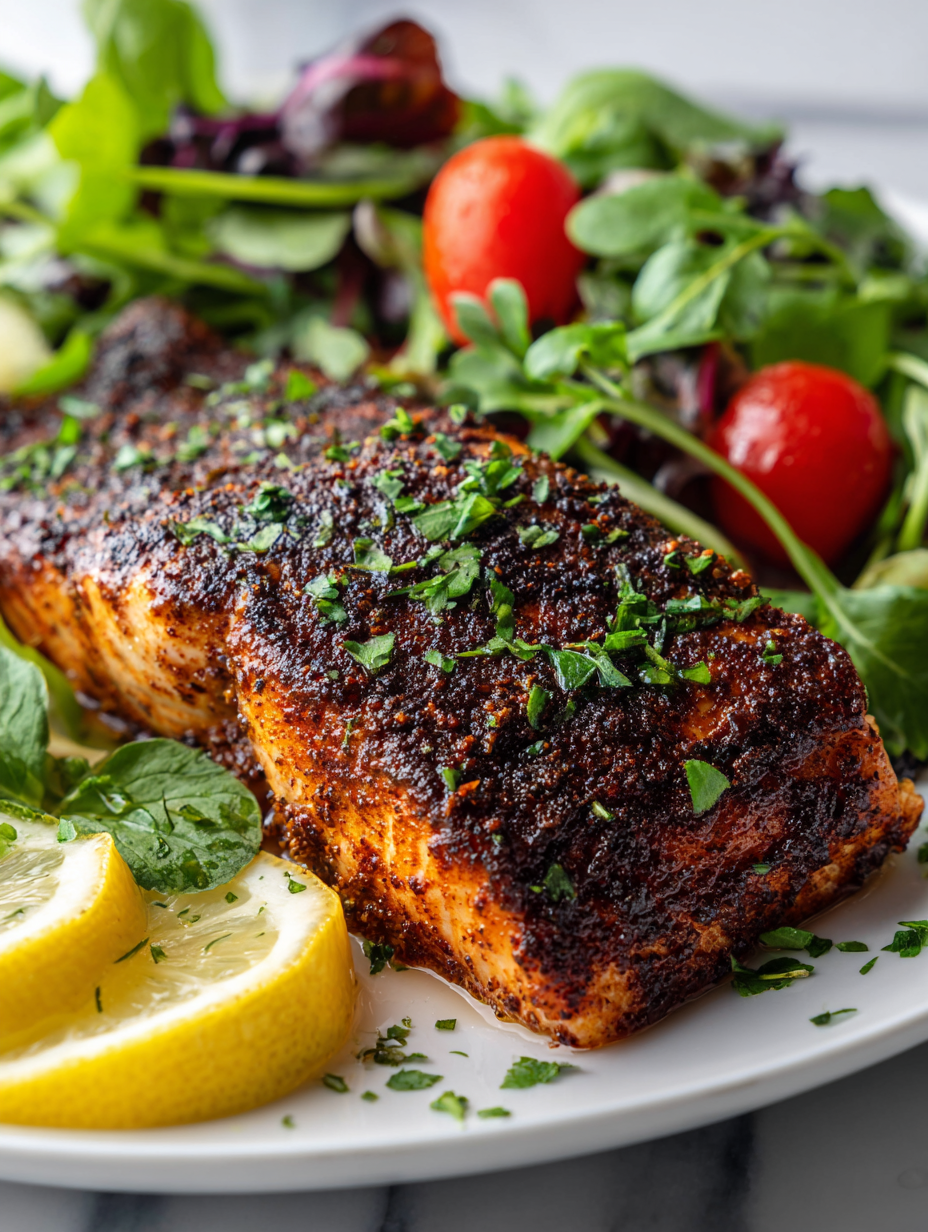
Blackened Salmon
Ingredients
Equipment
Method
- Preheat your cast-iron skillet over medium-high heat until it’s shimmering and hot, about 3-4 minutes, with a gentle sizzle when you flick a drop of water.
- In the meantime, pat the salmon fillets dry with paper towels to remove excess moisture, which helps the crust stick and sear evenly.
- In a small bowl, combine smoked paprika, cayenne pepper, black pepper, sea salt, and dried thyme if using. Stir until well blended to create your spice rub.
- Lightly brush each salmon fillet on all sides with the high-smoke point oil, ensuring an even coat to help the spices adhere and prevent sticking.
- Press the spice mixture firmly onto all sides of each fillet, creating a thick, even crust that covers the surface thoroughly.
- Place the coated salmon fillets skin-side down (if skin-on) in the hot skillet. Gently press down with a spatula for about 10 seconds to ensure good contact and crust formation.
- Sear for 3-4 minutes, until the crust is darkened and aromatic with a crackling sound, indicating a good sear.
- Carefully flip each fillet using a spatula and cook for another 2-3 minutes, watching for a deep, smoky crust and an internal temperature of about 52°C (125°F).
- Remove the salmon from the skillet and transfer to a plate. Let it rest for 2 minutes, allowing the juices to settle and the crust to crisp up further.
- Squeeze fresh lemon juice over the rested salmon just before serving to brighten the smoky flavors and add a zesty finish.
- Serve immediately with your favorite sides, enjoying the fiery crust and tender, flaky flesh of the salmon.
Pro tips for blackened salmon
- Bolded mini-head: Use high heat — ensure your pan is shimmering hot before adding the fish for that immediate crackle.
- Bolded mini-head: Don’t overcrowd the pan — give each fillet space to sear evenly and develop that smoky crust.
- Bolded mini-head: Press down gently after adding fish — helps the spices stick and creates better contact for searing.
- Bolded mini-head: Watch the spices — if they start to smoke too much or burn, lower the heat slightly to prevent bitterness.
- Bolded mini-head: Flip carefully — wait for the crust to turn dark and aromatic before flipping to avoid sticking or tearing.
- Bolded mini-head: Rest the fish briefly — let it sit for 2 minutes after cooking to redistribute juices and keep crust crisp.
Common mistakes and how to fix them
- FORGOT to preheat the pan → Preheat until shimmering to prevent sticking.
- DUMPED too much oil → Use just enough to lightly coat the fish; too much causes steaming.
- OVER-TORCHED the spice rub → Keep an eye; spices burn quickly, turning bitter.
- MISSED resting time → Rest fish 2 minutes for juices to settle, avoiding dryness.
Quick fixes and pantry swaps
- When spices burn quickly, splash a little water to stop the smoke and lower heat.
- If the crust isn’t dark enough, increase the heat slightly and sear for a minute longer.
- Dumped too much oil? Wipe excess with a paper towel before searing again.
- When fish sticks to the pan, ensure it’s hot enough before adding and don’t disturb too early.
- Patch a burnt spice rub by scraping the surface and re-seasoning lightly for that smoky punch.
Prep, store, and reheat tips
- Prep the spice rub ahead: mix and store in an airtight container for up to a week, keeping the smoky aroma vibrant.
- Pat dry and season the salmon at least 30 minutes before cooking; keep refrigerated to allow flavors to meld.
- Cooked salmon can be stored in the fridge for up to 2 days, wrapped tightly to prevent drying out and absorb odors.
- Reheat gently in a hot skillet or under an oven broiler for 2–3 minutes until the crust crackles again and the fish is warmed through—smell for that smoky aroma to gauge warmth.
Top questions about blackened salmon
1. What makes blackened salmon crust so smoky and spicy?
Blackened salmon gets a spicy, smoky crust from a spice rub that chars quickly in a hot pan. The key is high heat and quick searing to avoid burning the spices while building that flavorful crust.
2. How do I get that perfect crust on the salmon?
Use a cast-iron skillet preheated until shimmering. Pat the fish dry, coat with oil, then press on your spice mix. Sear for 3-4 minutes per side until dark and aromatic.
3. Can I make this milder or spicier?
Adjust the spice level by adding more cayenne if you want more heat. Use smoked paprika for a deeper smoky flavor or regular paprika for milder taste.
4. What oil should I use for searing?
Yes, you can substitute olive oil with grapeseed or canola oil for higher smoke points. If using butter, add it after searing to avoid burning.
5. How do I know when the salmon is done?
Cook until the crust is dark but not burnt, internal temperature hits about 52°C (125°F), and the flesh flakes easily when tested with a fork.
6. What if the spices burn during cooking?
If the spices start to burn, lower the heat immediately, or remove the fish early and finish in the oven. Keep an eye on color and smell during searing.
7. Should I rest the salmon after cooking?
Rest the cooked salmon for 2 minutes after removing from pan. Squeeze lemon over right before serving for freshness and brightness.
8. Can I make the spice rub in advance?
You can prepare the spice mix a few days ahead and store it airtight. Pat dry and season the fish just before searing for best results.
9. How do I reheat leftover blackened salmon?
Reheat in a hot skillet for 2-3 minutes until the crust shimmers and crackles again. Use a gentle heat to prevent drying out.
10. What if my crust isn’t dark enough?
If the crust isn’t dark enough, increase the heat slightly and sear a minute longer. For sticking, ensure the pan is hot before adding the fish.
This blackened salmon recipe is about capturing that smoky, peppery crust that makes every bite exciting. It’s a dish that reminds me of coastal grills and spontaneous summer nights, even in the dead of winter. When that crust crackles and the aroma fills the kitchen, I feel like I’ve brought a little bit of the seaside into my home.
No matter how many times I make it, I’m always surprised by how simple ingredients can create something so bold and memorable. It’s a reminder that good technique and honest spices are all you need to turn everyday fish into a special meal. And honestly, that crispy, flavorful crust makes every plate worth the effort.

Hi, I’m Daniel Whitaker, the voice and recipe developer behind Broth Psychologist. I’m so glad you’re here. This little corner of the internet started as a way for me to share comfort through cooking, but it has grown into something much deeper.
 Hi, I’m Daniel Whitaker, the voice and recipe developer behind Broth Psychologist. I’m so glad you’re here.
This little corner of the internet started as a way for me to share comfort through cooking, but it has grown into something much deeper.
It’s where food meets feeling, and where simple ingredients tell meaningful stories.
Hi, I’m Daniel Whitaker, the voice and recipe developer behind Broth Psychologist. I’m so glad you’re here.
This little corner of the internet started as a way for me to share comfort through cooking, but it has grown into something much deeper.
It’s where food meets feeling, and where simple ingredients tell meaningful stories.