
Scrambled eggs are one of those breakfast staples that can feel surprisingly personal. It’s not just about whisking eggs and tossing them in a pan; the texture you aim for—creamy, fluffy, or somewhere in between—can really reflect your mood or even your mood swings in the kitchen. Over the years, I’ve fiddled with techniques, from low and slow to quick and hot, trying to nail that perfect consistency that makes me want to keep eating even after breakfast is over.
What I’ve realized is that the secret often isn’t in some fancy ingredient or gadget, but in small, intentional decisions—how much heat, when to stir, and the timing of adding butter or cream. These tiny tweaks can turn a simple scrambled egg from a dull scramble to a rich, tender bite that feels like a treat. It’s genuinely satisfying to find that sweet spot where everything comes together just right, and I think it’s worth sharing those little insights.
This recipe isn’t about perfection; it’s about understanding your own preferred texture and embracing the process. Sometimes I want mine luxuriously creamy, other times a bit fluffier, depending on how I’m feeling or what I’m craving. It’s a humble dish, but one that can be endlessly personalized—an everyday comfort that’s worth mastering.
Focusing on how the texture of scrambled eggs can be a personal expression, from creamy to fluffy, depending on technique, ingredients, and timing.
The texture as a personal signature
- Scrambled eggs have always been my comfort, but perfecting their texture feels like a quiet victory.
- There’s a nostalgic joy in the creamy, gently curdled eggs that takes me back to mornings at my grandma’s table.
- I love the chaos of rushing to get eggs on the plate before they overcook—part of the fun, even if it’s a mess.
- Achieving that fluffy, tender scramble after so many tries makes me proud, like I’ve cracked a secret.
- Sometimes I crave the rich, silky feel of eggs right off the pan, and other times I want them light and airy—both are a small thrill.
The story behind this recipe
- Some mornings, I just crave scrambled eggs that feel like a little luxury—silky, almost custardy, with that gentle wiggle when you stir them just right. I remember standing in my tiny kitchen, late at night, experimenting with different butter ratios and heat levels. It was almost meditative, trying to get that perfect, creamy texture that’s neither overdone nor undercooked.
- What keeps me coming back to this simple dish is how forgiving it can be—if you listen closely, the eggs tell you when they’re ready. It’s not about rushing or following some strict rule, but about feeling your way through each step. Sometimes I add a pinch of smoked paprika or a drizzle of crème fraîche, but mostly, I just want that tender, slightly glossy bite that makes breakfast feel like a small, cozy celebration.
- heading: ‘The inspiration behind my scrambled eggs’
Historical and cultural snippets
- Eggs have been a staple in human diets for thousands of years, with some evidence dating back to ancient Persia and Egypt.
- The technique of scrambling eggs likely originated as a simple way to cook eggs quickly and efficiently in early kitchens.
- In many cultures, scrambled eggs are a symbol of comfort food, often associated with breakfast and family mornings.
- Despite its simplicity, the method of scrambling eggs has evolved—from slow-cooked creamy textures to quick, fluffy bites—reflecting changing tastes and kitchen tools.
Key ingredients and tips
- Eggs: I prefer farm-fresh eggs with vibrant yolks; they make the scramble rich and bright. If you can’t find them, choose eggs with deep-colored yolks for better flavor.
- Butter: I use plenty of butter—makes the eggs silky and adds a comforting aroma. For a lighter touch, swap with a splash of olive oil, though it’ll lose some richness.
- Cream or Milk: A splash of heavy cream is my secret weapon for extra creaminess. Skim milk works, but the texture’s a bit less lush.
- Salt: I add salt early, so it dissolves completely and flavors the eggs evenly. Use flaky sea salt for a gentle crunch on the finish.
- Pepper: Freshly cracked black pepper adds a sharp bite. Do it at the end to preserve that lively aroma and avoid bitterness.
- Optional Add-ins: Chives, cheese, or smoked salmon—whatever makes your eggs feel special. Remember, a little goes a long way in elevating the dish.
- Cooking Fat: I lean toward a nonstick skillet or seasoned cast iron to prevent sticking and get that even, gentle heat. Keep the heat medium-low for tender, slow-cooked eggs.
Spotlight on key ingredients
Eggs:
- I prefer farm-fresh eggs with vibrant yolks; they make the scramble rich and bright. If you can’t find them, choose eggs with deep-colored yolks for better flavor.
- Butter: I use plenty of butter—makes the eggs silky and adds a comforting aroma. For a lighter touch, swap with a splash of olive oil, though it’ll lose some richness.
- Cream or Milk: A splash of heavy cream is my secret weapon for extra creaminess. Skim milk works, but the texture’s a bit less lush.
Butter & Dairy:
- Butter: I use plenty of butter—makes the eggs silky and adds a comforting aroma. For a lighter touch, swap with a splash of olive oil, though it’ll lose some richness.
- Cream or Milk: A splash of heavy cream is my secret weapon for extra creaminess. Skim milk works, but the texture’s a bit less lush.
Notes for ingredient swaps
- Dairy-Free: Swap butter for olive oil or coconut oil. Expect a slightly different flavor and less richness.
- Low-Fat: Use skim milk instead of heavy cream. The eggs will be less creamy but still tasty.
- Vegan: Try silken tofu blended until smooth. It mimics creaminess but has a different texture and flavor.
- Salt: Use seasoned salts or a splash of soy sauce for umami depth. Be cautious with saltiness.
- Pepper: Substitute with white pepper or a pinch of paprika for a different aroma and mild heat.
- Cheese: Add crumbled feta, shredded cheddar, or vegan cheese. Each adds a unique flavor and texture.
- Herbs: Incorporate chopped chives, parsley, or dill for freshness. Dried herbs work, but fresh are better.
Equipment & Tools
- Nonstick skillet: Ensures gentle heat distribution and prevents sticking.
- Silicone spatula: For soft, continuous stirring without scratching the pan.
- Small bowl: For whisking eggs and mixing ingredients evenly.
Step-by-step guide to perfect scrambled eggs
- Equipment & Tools: Gather a nonstick skillet (preferably with sloping sides) for gentle heat, a silicone spatula for soft stirring, and a small bowl for whisking eggs.
- Crack 3 large eggs into the bowl. Add a pinch of salt and a splash of heavy cream (about 1 tbsp). Whisk vigorously until fully combined, with no streaks.
- Preheat your skillet over medium-low heat (around 120°C / 250°F). Drop in a generous knob of butter (about 1 tbsp) and let it melt slowly, shimmering without browning.
- Pour the eggs into the skillet. Let them sit undisturbed for about 10 seconds, then gently stir with the spatula, pushing eggs from the edges to the center.
- Keep stirring slowly and continuously. Watch for the eggs to start forming soft curds—this takes about 1-2 minutes. They should be glossy and slightly runny.
- If you notice the eggs browning or drying out, lower the heat further or remove the pan from the heat temporarily. The residual heat will finish cooking them.
- Once the eggs are mostly cooked but still slightly runny and glossy, remove from heat. Let sit for 15 seconds; they will finish cooking with residual warmth.
- Finish with freshly cracked black pepper and a sprinkle of chopped chives or cheese if desired. Plate immediately for best texture.
Serve immediately while warm and creamy. For an extra touch, garnish with herbs or a drizzle of olive oil. Rest for a minute off heat to allow flavors to settle before plating.
How to Know It’s Done
- Eggs should be soft, slightly glossy, and gently jiggle when moved.
- Color should be pale yellow with no signs of browning or dryness.
- The texture should be creamy and tender, not rubbery or crumbly.
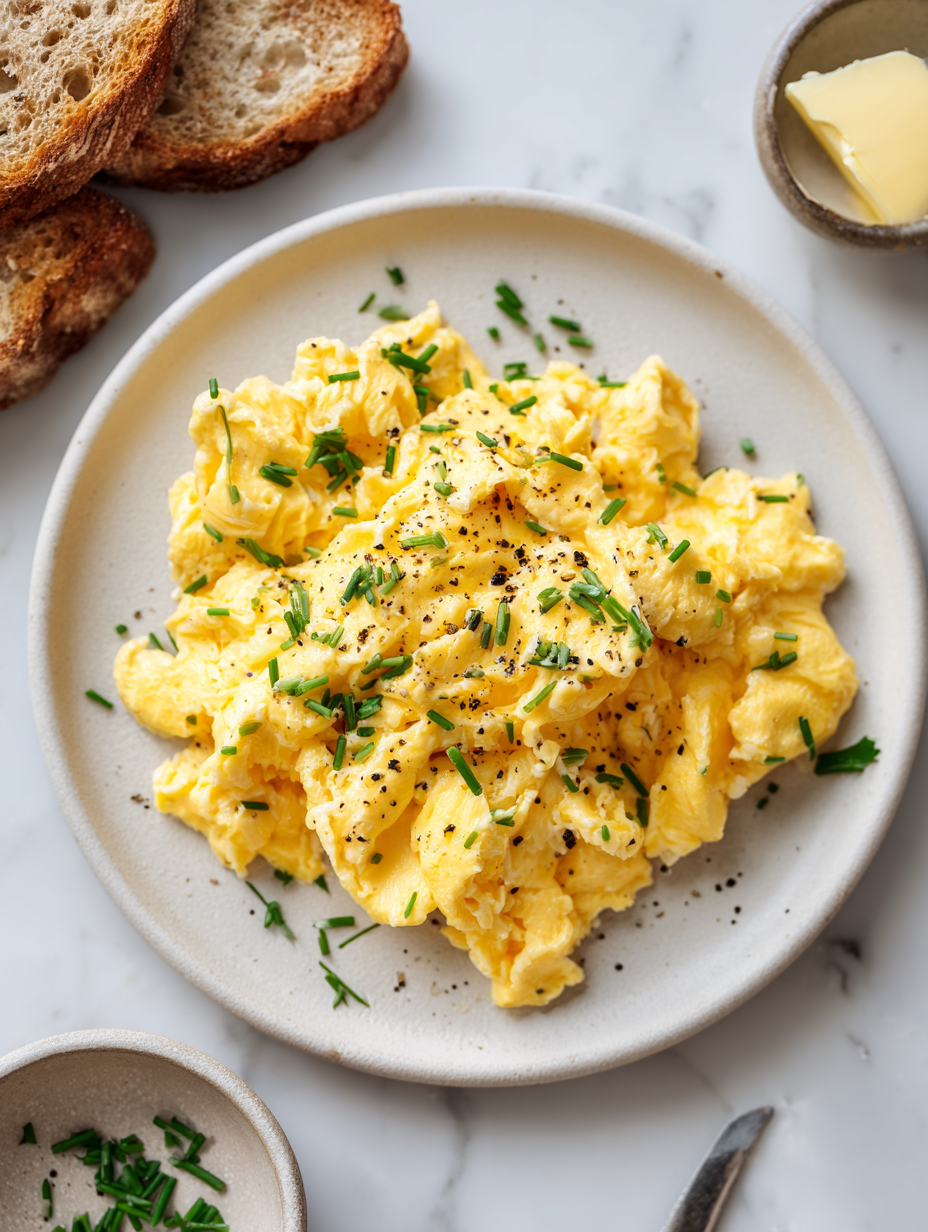
Perfect Scrambled Eggs
Ingredients
Equipment
Method
- Crack the eggs into a small bowl, then add a pinch of salt and a splash of heavy cream. Whisk vigorously until the mixture is smooth, with no streaks, and the yolks are fully incorporated.
- Preheat your nonstick skillet over low to medium-low heat and add a generous tablespoon of butter. Let it melt slowly, until it just shimmers but doesn’t brown, filling the kitchen with a rich, toasty aroma.
- Pour the whisked eggs into the warm skillet. Wait about 10 seconds until the edges just start to set, and you notice a slight bubbling sound as the eggs begin to cook.
- Gently stir the eggs with your silicone spatula, pushing from the edges toward the center in slow, circular motions. Keep the heat low, and listen for a soft, gentle sizzling as the eggs begin to form soft curds.
- Continue stirring slowly and consistently, watching the eggs turn glossy and creamy. This process should take about 1-2 minutes; the eggs will start to clump together into tender, slightly runny curds.
- If the eggs begin to brown or look dry, lower the heat further or remove the skillet from the burner to prevent overcooking. The residual warmth will finish the cooking process.
- Remove the skillet from heat just before the eggs are fully set—they should be slightly glossy and still soft to the touch. Let them rest for about 15 seconds; residual heat will gently finish the cooking, resulting in silky, tender eggs.
- Finish by cracking fresh black pepper over the eggs and folding in chopped herbs or cheese if desired. Serve immediately to enjoy their creamy, luxurious texture.
Tips for perfect scrambled eggs
- Low and slow: Use gentle heat to keep eggs tender and prevent curdling, around 120°C / 250°F.
- Constant gentle stirring: Keep the spatula moving in slow, figure-eight motions for creamy, evenly cooked eggs.
- Timing is key: Remove eggs just before they look fully set—residual heat will finish the job without overcooking.
- Add butter off heat: Stir in butter or cream right after removing from heat to preserve richness and silkiness.
- Use fresh eggs: Fresher eggs have firmer whites and brighter yolks, resulting in more vibrant, luscious eggs.
- Season early: Salt eggs during whisking to dissolve fully and evenly flavor the scramble, avoiding a flat taste.
- Avoid high heat: Hot pan + fast cooking = rubbery eggs. Keep it low and steady for silky, tender curds.
Common mistakes and how to fix them
- FORGOT to lower heat → Eggs turn rubbery, fix by reducing heat immediately.
- DUMPED eggs all at once → Stir gently, add eggs gradually for creamier texture.
- OVER-TORCHED eggs → Remove from heat early, residual heat finishes cooking softly.
- USED cold eggs → Room temperature eggs cook more evenly, avoid rubbery textures.
Quick fixes and pantry swaps
- If eggs look watery → Splash a little cold water to stop cooking immediately.
- When eggs are dry → Patch with a spoonful of warm, runny eggs and gently fold in.
- If eggs are over-torched → Shield with a damp cloth and lower heat to rescue softness.
- When eggs stick to pan → DUMP in a splash of oil, quickly scrape, then resume stirring.
- If you run out of butter → Swap with olive oil for a slightly different, but still tasty, texture.
Prep, store, and reheat tips
- Prep the eggs: Crack and whisk eggs with salt and cream the night before; store in an airtight container for up to 24 hours. Whisking early helps achieve a smoother scramble.
- Mise en place: Measure out butter, herbs, and any add-ins ahead. Keep them ready so you can focus on gentle stirring when cooking.
- Refrigeration: Store the whisked eggs covered in the fridge. The mixture might thicken slightly; give it a quick stir before cooking.
- Reheating leftovers: Gently warm scrambled eggs in a nonstick skillet over low heat, stirring constantly until just heated through. Expect a slightly firmer, less creamy texture.
- Shelf life & sensory notes: Eggs are best used within 24 hours for peak freshness. Reheated eggs may lose some silkiness but should still smell buttery and look pale yellow.
Top questions about scrambled eggs
1. Should I use fresh eggs or can I go with older ones?
Use fresh eggs for a richer, more vibrant yolk and a firmer white. Older eggs tend to be watery.
2. When should I add salt for the best flavor?
Add salt early in the whisking process so it dissolves evenly, flavoring the eggs from the inside out.
3. What’s the best heat setting for fluffy, creamy eggs?
Cooking over low heat and stirring gently prevents rubbery eggs. Patience is key for tender curds.
4. Can I leave out the cream or milk? Will it still taste good?
A splash of heavy cream makes eggs silkier, but milk can work if you want a lighter texture.
5. How do I know when scrambled eggs are done?
Remove eggs from heat just before they look fully set; residual heat will finish the job without overcooking.
6. How often should I stir the eggs during cooking?
Stir constantly and slowly, using a silicone spatula, to achieve soft, even curds without breaking them apart.
7. My eggs are too runny—what do I do?
If eggs turn watery or runny, lower the heat immediately and keep stirring gently; they will thicken up again.
8. When should I add herbs or cheese to my scrambled eggs?
For extra flavor, fold in herbs, cheese, or smoked salmon after removing from heat to preserve their bright aroma.
9. Can I make scrambled eggs ahead and reheat them later?
Reheat leftovers gently in a nonstick pan over low heat, stirring constantly until just warmed through.
10. What’s the best pan to cook scrambled eggs in?
Use a nonstick skillet or well-seasoned cast iron for gentle, even cooking and easy stirring.
Scrambled eggs might seem like a simple breakfast, but getting their texture just right is a small, satisfying challenge. It’s about the gentle touch, the patience, and listening to what your eggs need in that moment. When you finally master that silky, tender scramble, it’s a quiet win that makes every morning a little more special.
In the end, it’s a humble dish that rewards attention and care. Whether you prefer them creamy or fluffy, it’s all about how you handle the heat and stir, turning basic ingredients into something comforting and personal. That’s what keeps me coming back to this breakfast staple, year after year.
