
There’s something about the zing of lemon that can lift even the most familiar roast chicken into a new realm. When I first started adding citrus to my roasting routine, it was like discovering a secret ingredient that brightened everything—juicy, fragrant, and just a little bit unexpected. It’s simple, but it makes the whole meal feel more alive, more fresh, even after a few days in the fridge.
This recipe isn’t about complex techniques or rare ingredients. It’s about balance—how the lemon’s acidity cuts through the richness of the chicken, and how fresh herbs add that green, aromatic punch. I love how the whole house fills with that warm, herbal scent while it roasts—like a little celebration in the oven. It’s honest food, meant to be shared with people you care about, no fuss required.
Focusing on how the brightness of lemon elevates the humble roast chicken, making it feel lively and fresh even after days in the fridge.
Brightening the Ordinary with Lemon
- The first time I squeezed lemon over a hot roast, I felt like I was unlocking a secret to making chicken feel fresh and vibrant, even if it’s been in the fridge for days.
- I used to think roast chicken was just a weeknight staple, but adding herbs and lemon turned it into a meal I look forward to sharing on special occasions.
- There’s a weird joy in biting into crispy skin that’s been kissed with lemon zest—bright, slightly smoky, and utterly comforting.
- This recipe reminds me of family dinners where a simple roast could turn into a feast, filling the house with herbal and citrus aromas that linger long after the meal ends.
Inspiration from Family and Simplicity
- This recipe came together on a lazy Sunday afternoon when I had a whole chicken and a burst of citrus longing. I remembered how my grandmother used lemon and herbs to brighten up her roasts, making even the simplest chicken feel special. There’s a kind of magic in the way lemon’s sharp tang wakes up the senses and pairs with fresh herbs to create layers of flavor that feel both familiar and exciting.
- I started experimenting with different herbs, but it was the lemon—so bright, zesty, and almost oozy—that truly transformed the dish. I love that this roast isn’t just about crispy skin or juicy meat; it’s about the way the lemon’s acidity and herbal aroma mingle, filling the kitchen with a scent that’s both comforting and invigorating. It’s a reminder that simple ingredients, when combined thoughtfully, can turn a humble meal into a little celebration.
- heading
- story_type
Contextual origin, trivia, or history
- Lemon and herbs have been used in Mediterranean cooking for centuries, prized for their ability to brighten and preserve meat.
- The tradition of roasting chicken with citrus dates back to ancient times, where it was believed to add both flavor and a touch of healthful acidity.
- Herbs like thyme and rosemary are native to the Mediterranean basin, historically used to ward off pests and add aromatic complexity to roasted dishes.
- In colonial America, lemon was a luxury item, so citrus-infused roasts were considered a special treat for gatherings and celebrations.
Ingredient breakdown: key components
- Lemon: I love how lemon zest and juice add a bright, tangy punch that wakes up the whole dish; swap with lime for a slightly different zing.
- Fresh herbs: Parsley, thyme, or rosemary—each brings a fragrant, green complexity; dried herbs work in a pinch but lose some vibrancy.
- Olive oil: It keeps the skin crispy and adds a mellow richness; if you want a lighter touch, try a neutral oil like canola, but you’ll miss that fruity depth.
- Whole chicken: The best for roasting—juicy, crispy, and forgiving; if pressed for time, use bone-in breasts, but you’ll lose some flavor and succulence.
- Garlic: I crush it to release that aromatic, slightly sweet perfume; minced or sliced works, but whole cloves tend to mellow out more.
- Salt: Essential for seasoning and skin crispiness; don’t skimp, but taste and adjust as you go—over-salting can overshadow the lemon.
- Black pepper: Freshly cracked, it adds a spicy heat that balances the acidity; skip if you prefer a milder flavor but consider a pinch of paprika for color.
Spotlight on key ingredients
Lemon:
- I love how lemon zest and juice add a bright, tangy punch that wakes up the whole dish; swap with lime for a slightly different zing.
- Fresh herbs: Parsley, thyme, or rosemary—each brings a fragrant, green complexity; dried herbs work in a pinch but lose some vibrancy.
- Olive oil: It keeps the skin crispy and adds a mellow richness; if you want a lighter touch, try a neutral oil like canola, but you’ll miss that fruity depth.
Fresh herbs and garlic:
- Herbs: Fresh herbs release aromatic oils that intensify as they roast, filling the kitchen with herbal fragrance; dried herbs can be used but lack vibrancy.
- Garlic: When crushed or sliced, garlic releases a sweet, pungent aroma that mellows and caramelizes during roasting, adding depth and subtle sweetness.
Notes for ingredient swaps
- Lemon: I love how lemon zest and juice add a bright, tangy punch that wakes up the whole dish; swap with lime for a slightly different zing.
- Fresh herbs: Parsley, thyme, or rosemary—each brings a fragrant, green complexity; dried herbs work in a pinch but lose some vibrancy.
- Olive oil: It keeps the skin crispy and adds a mellow richness; if you want a lighter touch, try a neutral oil like canola, but you’ll miss that fruity depth.
- Whole chicken: The best for roasting—juicy, crispy, and forgiving; if pressed for time, use bone-in breasts, but you’ll lose some flavor and succulence.
- Garlic: I crush it to release that aromatic, slightly sweet perfume; minced or sliced works, but whole cloves tend to mellow out more.
- Salt: Essential for seasoning and skin crispiness; don’t skimp, but taste and adjust as you go—over-salting can overshadow the lemon.
- Black pepper: Freshly cracked, it adds a spicy heat that balances the acidity; skip if you prefer a milder flavor but consider a pinch of paprika for color.
Equipment & Tools
- Roasting pan with rack: Supports even heat and lifts chicken for crispy skin.
- Kitchen twine: Trusses the chicken legs for even cooking.
- Sharp knife and chopping board: Preps herbs and lemon zest, slices chicken for serving.
- Meat thermometer: Checks internal temperature for doneness.
- Basting brush: Applies pan juices or oil during roasting.
Step-by-step guide to roast chicken
- Preheat your oven to 220°C (425°F). Place a rack inside a roasting pan for even heat circulation.
- Pat the chicken dry with paper towels—this helps achieve crispy skin. Rub generously with salt, pepper, and a tablespoon of olive oil, making sure to coat all surfaces.
- Stuff the cavity with halved lemons, a few sprigs of thyme, and garlic cloves. Tie the legs with kitchen twine to keep everything contained.
- Place the chicken breast-side up on the rack. Roast in the oven for about 15 minutes to start the skin crisping, then lower the temperature to 180°C (350°F).
- Continue roasting for 50-60 minutes. Baste the chicken with pan juices every 20 minutes. The skin should turn a deep golden brown, and the meat should juice clear when pierced.
- While roasting, prepare the lemon-herb mixture: chop fresh parsley, thyme, and rosemary. Zest and juice one lemon, and mix with a tablespoon of olive oil and a pinch of salt.
- Check for doneness: probe the thickest part of the thigh for an internal temp of 75°C (165°F), skin is crispy and golden, and juices run clear when pierced.
- Once out of the oven, transfer the chicken to a cutting board and cover loosely with foil. Let rest for 10–15 minutes to allow juices to redistribute.
- Slice the chicken, drizzle with the lemon-herb mixture, and serve with extra lemon wedges for squeezing.
Rest the chicken loosely tented with foil for 10–15 minutes. Carve, then drizzle with fresh lemon-herb mixture. Serve with extra lemon wedges for squeezing at the table.
How to Know It’s Done
- Probe the thigh for 75°C (165°F) internal temperature.
- Skin is deeply golden and crispy, with a crackle when pressed lightly.
- Juices run clear when the thickest part of the thigh is pierced.
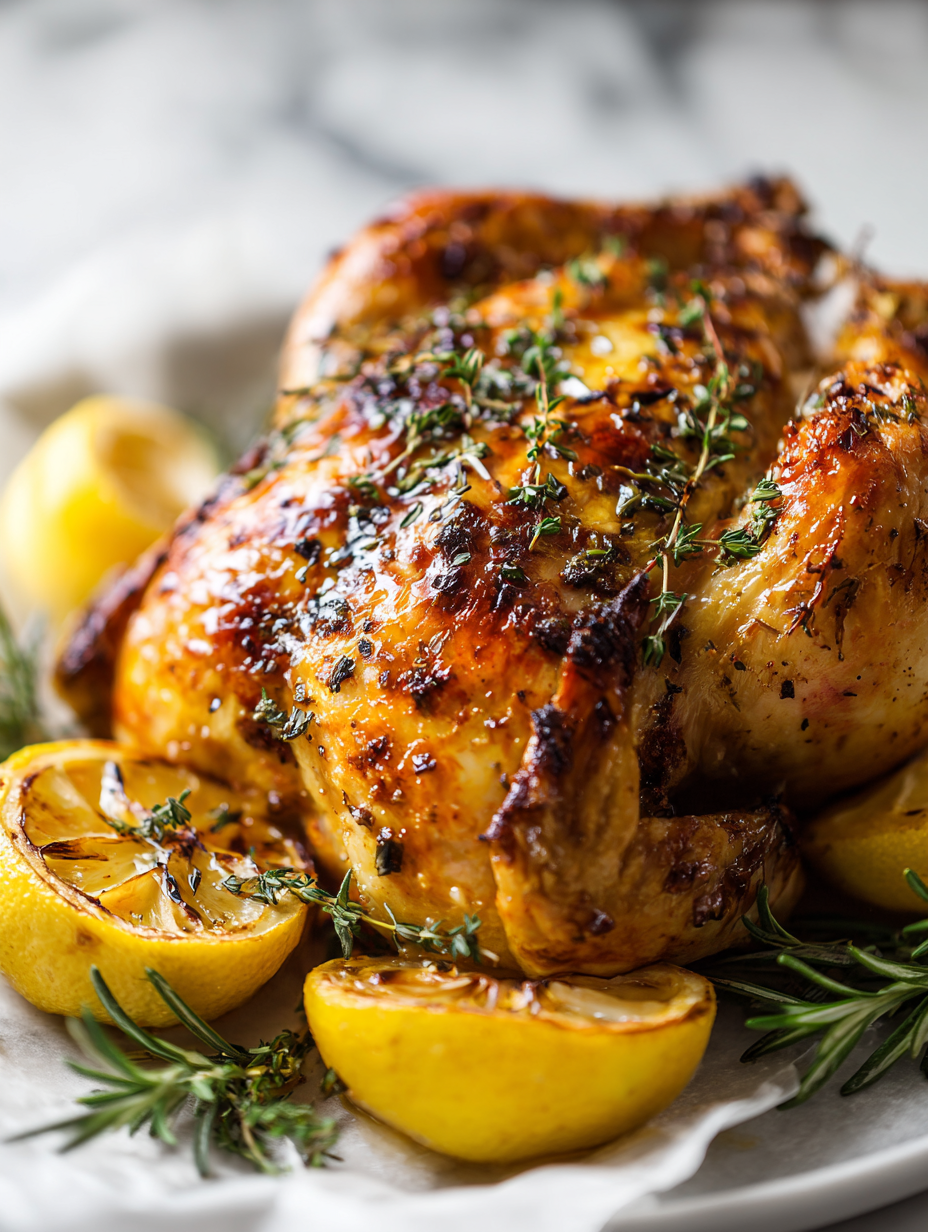
Lemon and Herb Roast Chicken
Ingredients
Equipment
Method
- Start by preheating your oven to 220°C (425°F). Place a rack inside a roasting pan to support the chicken for even crisping.
- Pat the chicken dry thoroughly with paper towels—this step is key for crispy skin. Rub the entire chicken generously with olive oil, then season all over with salt, black pepper, and lemon zest.
- Stuff the cavity with halved lemons and crushed garlic cloves, then tie the legs with kitchen twine to keep everything neatly in place.
- Place the chicken breast-side up on the rack and roast in the oven for about 15 minutes at high heat, which helps start crisping the skin.
- Reduce the oven temperature to 180°C (350°F) and continue roasting for 50-60 minutes, basting with pan juices every 20 minutes to keep the skin golden and moist.
- While the chicken roasts, prepare a lemon-herb drizzle by mixing chopped herbs, lemon juice, and a little olive oil in a small bowl. Set aside.
- Check the chicken’s internal temperature with a meat thermometer; it should read 75°C (165°F), and the skin should be deep golden and crispy.
- Remove the chicken from the oven, transfer to a cutting board, and loosely tent with foil. Let rest for 10-15 minutes to allow juices to settle.
- Slice the chicken, then drizzle generously with the fresh lemon-herb mixture, letting the bright flavors seep into the meat and skin.
- Serve with extra lemon wedges on the side for squeezing, and enjoy the crispy, juicy, and fragrant roast chicken.
Notes
Pro tips for perfect roast chicken
- Bolded mini-head: Crispy Skin → Ensure the chicken skin is thoroughly dry before roasting for maximum crunch and golden color.
- Bolded mini-head: Lemon Zest → Use a microplane to grate lemon zest; it releases aromatic oils that brighten the entire dish.
- Bolded mini-head: Herb Infusion → Chop herbs finely to release more flavor; add them towards the end of roasting for fresh aroma.
- Bolded mini-head: Baste Regularly → Spoon pan juices over the chicken every 20 minutes to keep meat moist and skin crispy.
- Bolded mini-head: Rest Properly → Let the chicken rest, tented loosely with foil, for at least 10 minutes to redistribute juices.
Common mistakes and how to fix them
- FORGOT to pat chicken dry before roasting — always dry for crispy skin.
- DUMPED too much lemon juice at once — add gradually for balanced brightness.
- OVER-TORCHED the skin — reduce oven temp if skin darkens too quickly.
- SKIPPED resting time — rest for juicy, tender meat and even flavors.
Quick fixes and pantry swaps
- If skin isn’t crisp, increase oven temp for the last 10 minutes.
- Splash lemon juice early to prevent overpowering the dish.
- Patch over burnt bits with fresh herbs and lemon zest.
- Shield chicken with foil if skin darkens too quickly.
- When in doubt, swap lemon with lime for a similar bright note.
Prep, store, and reheat tips
- You can prep the chicken by seasoning and stuffing it with lemon and herbs a day ahead. Keep it uncovered in the fridge to dry out the skin slightly, which helps it get crispy when roasting.
- Store leftovers in an airtight container in the fridge for up to 3 days. The bright lemon and herbal flavors mellow over time, so expect a slightly softer aroma but still fresh and tasty.
- Reheat gently in a 160°C (320°F) oven covered with foil for about 20 minutes, until warmed through. The skin won’t be as crisp but the meat stays juicy and fragrant.
- The roasted chicken can be frozen for up to 2 months. Thaw overnight in the fridge and reheat as above. Expect a bit of moisture loss, but the lemon-herb essence still shines through.
Top questions about roast chicken with lemon and herbs
1. Can I use bottled lemon juice instead of fresh?
Use fresh lemon juice and zest for a bright, tangy flavor that really wakes up the dish. Dried lemon or bottled juice won’t give the same vibrant punch.
2. What’s the best oven temperature for roasting this chicken?
Roasting at 180°C (350°F) after the initial high temp ensures crispy skin and juicy meat. Keep an eye on the skin color and juices to avoid burning.
3. Why should I rest the chicken before carving?
Allow the chicken to rest uncovered for 10-15 minutes after roasting. This helps juices redistribute, making the meat more tender and flavorful.
4. Can I substitute dried herbs for fresh ones?
Fresh herbs like parsley, thyme, or rosemary add aromatic, green notes. Dried herbs can be used but will lack the same vibrant freshness and aroma.
5. How do I know when the chicken is perfectly cooked?
Use a meat thermometer to check for an internal temp of 75°C (165°F) in the thickest part of the thigh. Juices should run clear, and skin should be golden and crispy.
6. Can I use lime instead of lemon?
Lemon zest and juice are key for brightness. Lime can be a good substitute but may alter the flavor profile slightly. Avoid bottled juice for zesting.
7. Why is my chicken skin not crispy?
Always pat the chicken dry before roasting. Excess moisture prevents skin from crisping and can cause steaming instead of roasting.
8. Should I use a rack when roasting?
Roast the chicken on a rack to allow heat circulation and even crisping. It helps achieve that perfect crackly skin all over.
9. How should I store and reheat leftovers?
Leftovers can be stored in the fridge for up to 3 days. Reheat gently in the oven to keep the skin crispy and meat juicy.
10. What if my skin burns before the meat is cooked?
If the skin burns too quickly, tent the chicken loosely with foil or lower the oven temperature. For a quick fix, a splash of lemon juice can brighten overcooked bits.
This dish feels like an old friend—familiar yet lively, thanks to that burst of citrus and fresh herbs. It’s simple enough for a weeknight but special enough to make you pause and savor each bite. The aroma alone, with lemon and herbs filling the kitchen, makes every moment of cooking feel a bit more intentional.
In times when food feels routine, this roast chicken reminds me that straightforward flavors can still surprise and delight. Plus, it’s honest, unpolished, and true to the kind of meal I want to keep coming back to—something that’s both comforting and lively, right in tune with the season.

Hi, I’m Daniel Whitaker, the voice and recipe developer behind Broth Psychologist. I’m so glad you’re here. This little corner of the internet started as a way for me to share comfort through cooking, but it has grown into something much deeper.
 Hi, I’m Daniel Whitaker, the voice and recipe developer behind Broth Psychologist. I’m so glad you’re here.
This little corner of the internet started as a way for me to share comfort through cooking, but it has grown into something much deeper.
It’s where food meets feeling, and where simple ingredients tell meaningful stories.
Hi, I’m Daniel Whitaker, the voice and recipe developer behind Broth Psychologist. I’m so glad you’re here.
This little corner of the internet started as a way for me to share comfort through cooking, but it has grown into something much deeper.
It’s where food meets feeling, and where simple ingredients tell meaningful stories.


