
Chicken Piccata often feels like a quick fix for a bright, lively dinner that somehow feels more special than it takes. I love how the lemon and capers punch through the richness of the chicken, making every bite feel like a little celebration. It’s one of those dishes I turn to when I want something fresh and uncomplicated but still impressive.
There’s something about the way the lemon zest and briny capers dance around in the pan that reminds me of summer nights and easy gatherings. It’s a dish that comes together fast, but the flavors linger—zesty, salty, and just a touch tangy. Honestly, it’s the kind of meal that makes you feel like a pro in the kitchen without breaking a sweat.
Focusing on how the bright, punchy lemon and briny capers elevate the humble chicken into a vibrant, almost celebratory dish, transforming simple weeknight cooking into a moment of bright, aromatic joy.
Bright Flavors, Simple Technique
- That first burst of lemon aroma always makes me smile, like a little burst of sunshine in the kitchen.
- I remember making this on a busy weeknight, feeling surprisingly proud when everyone asked for seconds.
- There’s a nostalgic comfort in hearing the sizzle of chicken as it hits the pan, reminding me of family dinners.
- Honestly, nothing beats the way the capers pop softly, releasing their salty-briny goodness right as you serve.
- Sometimes I add a splash of white wine just to deepen the sauce—it’s a small tweak that makes a big difference.
The story behind this recipe
- This dish came about after a trip to Sicily, where I tasted a version of chicken cooked simply with lemon and capers. That sun-drenched flavor stuck with me, and I kept trying to recreate it at home, tweaking the technique until it felt just right.
- One evening, I threw together what was supposed to be a quick dinner, but the way the lemon and briny capers played off the tender chicken made me pause. It was almost like a little celebration in every bite, reminding me how simple ingredients can shine when treated right.
- Now, I keep this recipe as a go-to, especially when I want something bright and satisfying without fuss. It’s a dish that feels both nostalgic and fresh, a reminder that good things happen when you keep things simple and trust the process.
Historical & Cultural Roots
- Chicken Piccata’s roots trace back to Italy, where lemon and capers are staples in coastal cooking.
- The dish gained popularity in America during the mid-20th century, especially in Italian-American restaurants.
- Traditionally, it was a way to elevate humble chicken into a refined, flavorful meal using bright, tangy ingredients.
Key Ingredient Insights
- Chicken breasts: I prefer pounding them to even thickness for uniform cooking, which prevents dry edges. You might try slicing thinner if you’re short on time.
- Lemon: The zest and juice really brighten everything—use fresh, juicy lemons. Skip zest if your lemons are dull, but don’t skimp on the juice, it’s the punch.
- Capers: They add that briny pop, but if you’re sensitive to salt, rinse them well to mellow the saltiness or use fewer.
- Flour: I lightly dust the chicken to get a golden crust—avoid heavy coating or it turns gummy. A quick shake-off is all you need.
- Butter & Olive Oil: I use a combo for flavor and heat tolerance—olive oil for crispiness, butter for richness. For a dairy-free version, try avocado oil and skip the butter, but the flavor shifts a bit.
- White wine (optional): Adds depth, but if you skip it, a splash of chicken broth works fine—look for a bright, slightly fruity note.
- Parsley (for garnish): Adds freshness and color—don’t forget to chop it finely for a delicate finish that balances the richness.
Key Ingredients that Shine
Lemon:
- I use fresh lemons, zested and juiced, because their bright, citrus aroma wakes up every bite. Skip zest if lemons are dull, but don’t skimp on juice—it’s the punch that makes the dish sing.
- Capers: They add a salty, briny burst that’s almost creamy. Rinse them well to mellow their saltiness, especially if you prefer a milder flavor, but don’t skip them—they’re the unexpected pop of personality in every spoonful.
Chicken breasts:
- I pound them to an even thickness to ensure uniform cooking and a tender bite. They develop a golden, crispy crust that’s just right. If you’re short on time, slicing thinner can speed things up without sacrificing flavor.
- Flour: I dust the chicken lightly to help it brown and create that appealing crust. Too much turns gummy; a quick shake-off is enough. It’s the simple trick that makes all the difference in texture.
Notes for ingredient swaps
- Dairy-Free: Swap butter for extra virgin olive oil. You lose some richness, but keep the bright, briny sauce lively.
- Gluten-Free: Use almond flour or rice flour instead of wheat flour for dredging. It crisps up nicely, with a slightly nuttier flavor.
- Vegan: Replace chicken with firm tofu or tempeh, and use vegetable broth. The tofu will soak up the tangy lemon and capers beautifully.
- Low-Sodium: Rinse capers well or reduce their amount. Use low-sodium broth or white wine to control salt without losing flavor.
- Extra Bright: Add a splash of fresh lemon juice just before serving for an extra zing that pops on your palate.
Equipment & Tools
- Large skillet (12-inch): For even heat and space to cook chicken without overcrowding.
- Sharp knife: To pound and trim chicken evenly.
- Shallow dish: For dredging chicken in flour.
- Tongs: To flip and handle chicken safely.
- Paper towels: For drying chicken to ensure crispness.
- Spoon: To baste and stir the sauce.
Step-by-step guide to pan searing
- Equipment & Tools: Gather a large skillet (12-inch) for even heat, a sharp knife for pounding, a shallow dish for flour, and tongs for flipping. Have a paper towel nearby for patting chicken dry and a spoon for sauce.
- Pound chicken breasts to about 1.5 cm (0.6 inch) thickness. Season both sides with salt and pepper. Pat dry with paper towel for a good sear.
- Dredge chicken lightly in flour, shaking off excess. A dusting layer helps get that golden crust and prevents sticking.
- Heat olive oil (medium-high, 180°C/356°F) in the skillet until shimmering. Lay chicken in the pan carefully—should sizzle immediately. Cook for 3-4 mins per side until golden and cooked through. Flip once; avoid overcrowding. If sticking, lift gently and adjust heat.
- Remove chicken and set aside. In the same pan, add minced garlic (about 1 tsp) and cook until fragrant, about 30 seconds. Pour in 1/4 cup white wine (or broth) to deglaze, scraping up browned bits. Let it reduce slightly, about 2 mins.
- Add 2 tbsp lemon juice and 1 tbsp lemon zest. Stir in capers (about 1 tbsp), then return chicken to the pan. Spoon sauce over chicken. Cook for another 2 mins, letting flavors meld.
- Check sauce—if too thin, simmer a bit longer until slightly thickened. Adjust seasoning with salt or lemon if needed. Add a pat of butter (optional) for richness, swirling it in last for shine and smoothness.
- Resting & Finishing: Transfer chicken to plates, spoon sauce over, and sprinkle with chopped parsley. Let rest for 2 mins to absorb flavors before serving.
Transfer chicken to warm plates, spoon sauce generously over, and garnish with parsley. Let rest for 2 mins before serving to let flavors settle and juices redistribute.
How to Know It’s Done
- Chicken: Juices run clear when pierced and meat feels firm but tender.
- Sauce: Bright, lemony aroma with a slightly thickened, glossy appearance.
- Color: Chicken is golden and crusty outside, tender inside.
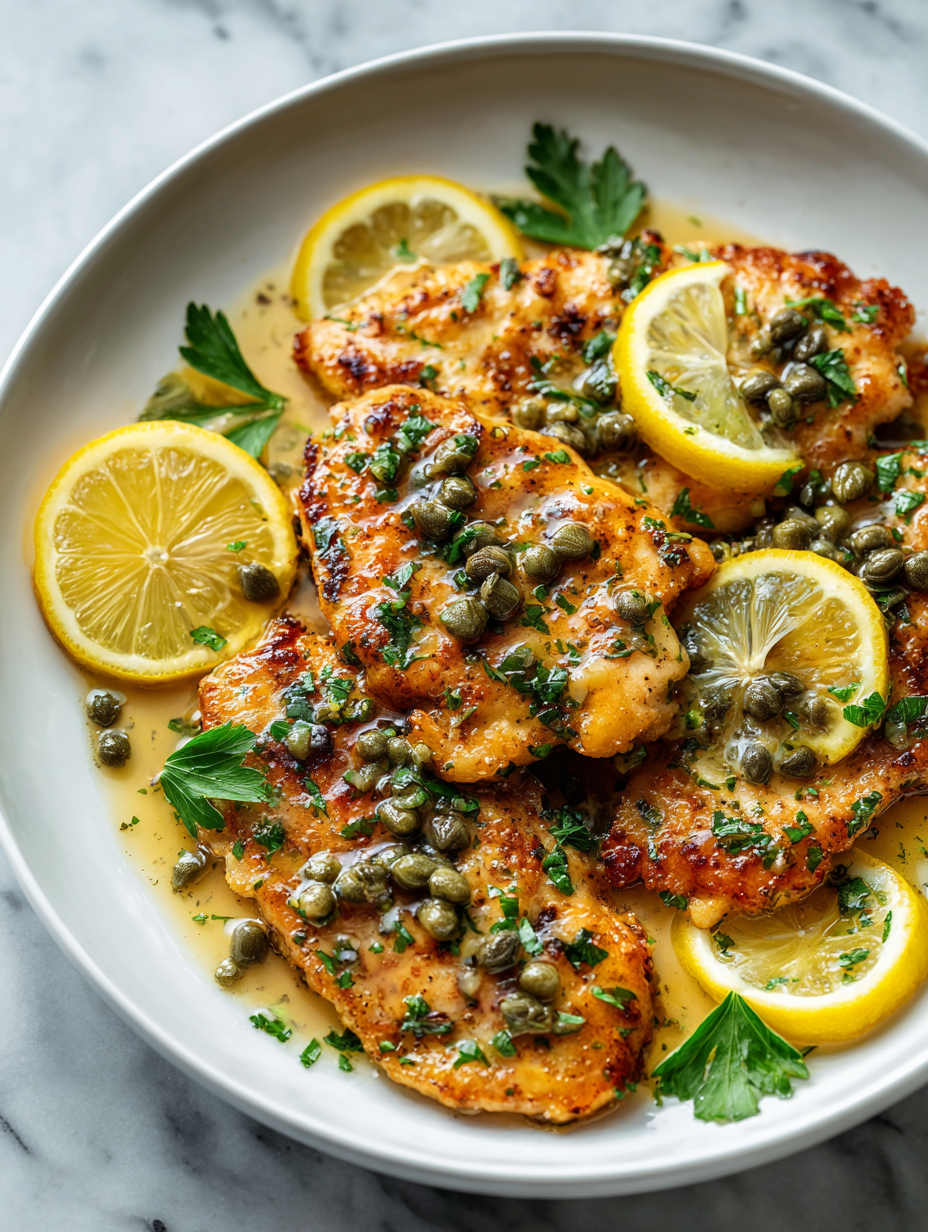
Chicken Piccata
Ingredients
Equipment
Method
- Start by pounding the chicken breasts to an even thickness of about 1.5 cm, then season them lightly with salt and pepper. Set up a shallow dish with flour and lightly dredge each piece, shaking off the excess for a thin, even coating.
- Heat the olive oil in a large skillet over medium-high heat until shimmering and just starting to smoke. Carefully place the chicken breasts in the pan and cook for about 3-4 minutes on each side, until they are golden brown and cooked through. Remove the chicken from the pan and set aside.
- Add the minced garlic to the same pan and cook until fragrant, about 30 seconds, stirring constantly. Pour in the white wine or chicken broth and scrape up any browned bits from the bottom of the pan, letting it simmer for 2 minutes until slightly reduced.
- Stir in the lemon juice and lemon zest, then add the rinsed capers. Return the chicken to the pan and spoon the sauce over the top. Cook for another 2-3 minutes, allowing the flavors to meld and the chicken to reheat slightly.
- If using, swirl in the butter to the sauce for extra richness and shine. Taste the sauce and adjust with more lemon or salt if needed. Sprinkle with chopped parsley just before serving for a fresh, vibrant finish.
- Transfer the chicken to plates, spoon the glossy, tangy sauce over the top, and garnish with additional parsley if desired. Serve immediately with your favorite side for a bright, flavorful meal.
Pro Tips for Perfect Chicken Piccata
- Bolded: Use a hot pan—wait until it shimmers before adding chicken for a crisp crust.
- Bolded: Don’t overcrowd the skillet—cook in batches if needed to prevent steaming and sticking.
- Bolded: Deglaze with wine or broth—scrape up browned bits for a richer, more layered sauce.
- Bolded: Add lemon zest early—its bright aroma infuses the oil and enhances the overall flavor.
- Bolded: Pat chicken dry—excess moisture prevents proper searing and crispy edges.
- Bolded: Rest the cooked chicken briefly—allows juices to redistribute, keeping it tender and juicy.
- Bolded: Finish with a pat of butter—swirl in at the end for a glossy, velvety sauce that clings beautifully.
Common mistakes and how to fix them
- FORGOT to pat chicken dry; caused steaming instead of searing. Pat dry for crisp crust.
- DUMPED all liquid at once; caused sauce to break. Add liquid gradually and stir constantly.
- OVER-TORCHED the sauce; turned bitter. Reduce heat early and simmer gently.
- MISSED resting time; led to dry chicken. Rest for 2 minutes before slicing to keep juices.
Quick fixes and pantry swaps
- When sauce separates, splash in a teaspoon of cold water to re-emulsify.
- If pan smokes excessively, turn down heat and add a splash of water to cool.
- DUMPED too much flour? Brush off excess before searing to avoid gummy coating.
- Splash with lemon juice if sauce lacks brightness—freshness wakes up the flavors.
- Rescue a burnt pan by pouring in hot water and simmering to loosen stuck bits.
Prep, store, and reheat tips
- Prepare chicken breasts: Pound and season ahead, then refrigerate in an airtight container for up to 24 hours, ensuring the meat stays plump and ready to sear. The lemon zest and capers can be pre-measured too.
- Dredge chicken in flour: Do this step just before cooking to maintain crispness; flour can be kept in a sealed jar for a day or two, but avoid humid environments to prevent clumping.
- Sauce components: Mix lemon juice, zest, and capers in advance; store in a small jar or bowl in the fridge for up to 2 days. The bright aroma might fade slightly, but the flavor intensifies after a quick reheat.
- Reheating: Gently warm the sauce in a skillet over low heat, about 2-3 minutes, until it shimmers and the lemon brightens. Reheat chicken briefly if needed, but avoid overcooking to keep it tender and juicy.
- Storage notes: Keep leftovers in an airtight container in the fridge for up to 2 days. Expect the sauce to thicken slightly; loosen with a splash of warm broth or water when reheating, and taste for brightness.
Top questions about Chicken Piccata
1. Can I use bottled lemon juice instead of fresh?
Use fresh lemon juice for that bright, tangy flavor that really wakes up the dish. Bottled lemon juice can taste dull and flat.
2. Should I rinse capers before adding?
Rinse capers briefly under cold water if you want to reduce saltiness. If you like them salty, skip rinsing and use sparingly.
3. How do I know when the chicken is done?
Cooking chicken to an internal temperature of 74°C (165°F) ensures it’s fully cooked but still tender. Use a meat thermometer for accuracy.
4. What if the sauce thickens too much?
If the sauce gets too thick or starts to stick, add a splash of warm broth or water and stir gently to loosen it up.
5. Can I use a smaller pan?
Use a 12-inch skillet for even heat distribution and enough space to cook the chicken without overcrowding, which causes steaming.
6. How do I get crispy chicken every time?
To keep the chicken crispy, don’t overcrowd the pan and make sure it’s hot enough before adding the chicken. Pat dry for a better sear.
7. Can I make this gluten-free?
You can substitute gluten-free flour like almond or rice flour for dredging. They turn crispy but may have a slightly different texture and flavor.
8. How do I fix a too-sour sauce?
Add a pinch of sugar or a splash of extra lemon juice if the sauce tastes too sharp or too salty; balance is key.
9. Should I rest the chicken after cooking?
Rest the cooked chicken for about 2 minutes before slicing to allow juices to redistribute, keeping it moist and tender.
10. How do I reheat leftovers without losing flavor?
Reheat gently over low heat, stirring in a splash of broth if the sauce thickens or separates. Be gentle to avoid overcooking.
This dish is a reminder that simple ingredients, when treated with care, can create something truly memorable. The bright pop of lemon and the briny capers make every bite feel fresh and lively, perfect for slicing through a busy week or celebrating a quiet night in.
Cooking it at home means you get to tweak the flavors just how you like them—more lemon, less salt, a richer sauce. It’s a dish that’s straightforward but never boring, and I find myself returning to it whenever I want something honest and satisfying.
