
This chicken fajita skillet is my go-to for nights when I want bold flavors without the fuss of turning on the oven or firing up the grill. It’s all about that smoky char and slightly caramelized edges, which you get from a hot skillet on the stovetop. The best part? It comes together quick, so you’re not stuck in the kitchen when you’d rather be eating.
I love how this dish transforms simple chicken and peppers into something vibrant and satisfying. It’s a bit chaotic to cook—peppers crackle, chicken sizzles, and the smell of cumin and lime fills the air—but that’s part of the fun. No fancy tools needed, just a good skillet and a little patience for tossing everything around.
Focusing on how this skillet transforms a busy weeknight dinner into a vibrant, smoky, and slightly charred experience without turning on the oven or grill.
A Skillet That Brings the Heat
- This skillet always surprises me with how quickly it turns simple ingredients into something vibrant and full of smoky depth.
- Cooking this dish feels like a little celebration—peppers crackle, chicken sears, and I can’t help but smile at how easy it is.
- There’s a nostalgic rush when I smell the cumin and lime—reminds me of summer nights and family dinners.
- I love how this recipe makes me feel resourceful—no oven, no fuss, just a hot skillet and a handful of ingredients.
- Every time I make it, I get a little proud—like I’ve managed to capture that smoky, charred flavor easily at home.
A Skillet That Brings the Heat
One evening, I was rushing home after a long day and craving something flavorful but quick. I threw together this skillet because I wanted that smoky, slightly charred taste without firing up the grill. The aroma of peppers and cumin filling my kitchen made me realize how simple ingredients can turn into something exciting. It’s become my go-to for busy nights when I still want to eat well and feel satisfied.
Fajita History and Fun Facts
- Fajitas originated in Texas as a way for Mexican-American cowboys to utilize tougher cuts of beef, which they cooked quickly over open flame.
- The word ‘fajita’ comes from the Spanish ‘faja,’ meaning ‘belt’ or ‘strip,’ referring to the thin strips of meat used traditionally.
- While beef is most common, chicken fajitas became popular in the 1980s as a leaner, more accessible option for home cooks and restaurants alike.
Ingredient breakdown
- Bell peppers: I love how the peppers turn sweet and smoky as they char—use a mix of colors for visual pop and flavor contrast, but feel free to swap in poblano or banana peppers for a milder kick.
- Chicken breast: I prefer boneless, skinless breasts—make sure to slice them thin for quick, even cooking, and season generously with cumin and chili powder. If you want juicier results, marinate for 15 minutes beforehand.
- Onion: I keep it simple with yellow onions—they soften and caramelize beautifully, adding a sweet depth. For a sharper bite, try red onions; just be aware they can turn a little more pungent when cooked.
- Fajita seasoning: I mix my own with cumin, smoked paprika, garlic powder, and a pinch of cayenne—no store-bought mix can beat fresh, but you can adjust the spice level to your taste or skip the cayenne for less heat.
- Lime: I squeeze fresh lime juice right at the end—brightens everything up with a citrusy zing and makes the flavors pop. For a different twist, try lemon or a splash of vinegar, but nothing beats that fresh lime brightness.
- Oil: I use a neutral oil like vegetable or canola—high smoke point helps achieve that perfect sear without burning. If you prefer, a little bacon fat can add a smoky richness, just watch the heat so it doesn’t smoke too much.
- Optional toppings: I love adding sliced avocado or sour cream—cool, creamy, and balancing the smoky spice. Feel free to top with chopped cilantro or pickled jalapeños for extra flair.
Spotlight on key ingredients
Bell peppers:
- Their sweet, smoky flavor deepens as they char—use a colorful mix for visual pop and flavor contrast; poblano or banana peppers can be good substitutes for milder heat.
- ingredient
Chicken breast:
- I slice it thin for quick searing, and it develops a tender, juicy bite when cooked properly. Marinate for extra flavor or season generously to prevent dryness.
- ingredient
Notes for ingredient swaps
- Dairy-Free: Swap sour cream with coconut yogurt—adds creaminess without dairy, but watch for coconut flavor.
- Vegetarian: Use portobello mushrooms or tofu instead of chicken—still hearty, just different texture and umami.
- Low-Sodium: Choose salt-free fajita seasoning or make your own—control salt levels and keep flavor punchy.
- Spice Level: Replace cayenne with smoked paprika for smoky depth, or omit altogether for milder heat.
- Oil Choices: Use avocado oil for a neutral, high smoke point flavor or sesame oil for a nutty twist—just a little goes a long way.
- Peppers: Swap bell peppers for poblano or banana peppers—different heat levels and smoky notes, but keep the vibrant color.
- Lime: Substitute with lemon or a splash of vinegar for acidity—still brightens, but different citrus character.
Equipment & Tools
- Large skillet (cast iron preferred): For high heat searing and even cooking
- Tongs: To flip and toss ingredients without breaking them
- Sharp knife: For clean, precise slicing of chicken and peppers
- Cutting board: Prepping ingredients on a stable surface
- Spatula: To stir and combine ingredients during cooking
Step-by-step guide to fajita skillet
- Gather your equipment: a large skillet (preferably cast iron), tongs, a sharp knife, a cutting board, and a spatula. Preheat the skillet over medium-high heat until it shimmers (~200°C / 390°F).
- Slice 2 chicken breasts into thin strips, about 1/4-inch thick. Toss with 1 tbsp olive oil and 2 tbsp fajita seasoning. Set aside.
- Core and slice 3 bell peppers (mix of red, yellow, green) into strips. Slice 1 onion into thin rings. Keep ready for quick cooking.
- Add 1 tbsp oil to the hot skillet. When shimmering, add chicken strips. Cook for 4-5 minutes, stirring occasionally, until browned and cooked through. (Check: internal temp should reach 75°C / 165°F).
- Remove chicken from skillet and set aside. In the same skillet, add peppers and onions. Cook for 5-7 minutes, stirring often, until softened and slightly charred at edges. (Check: peppers are smoky, onions are caramelized).
- Return chicken to skillet. Squeeze fresh juice of 1 lime over everything. Toss well and cook for another 2 minutes to meld flavors. Adjust seasoning if needed. (Check: fragrant, smoky, bright with citrus).
- For serving, transfer to a platter or directly onto warm tortillas. Garnish with sliced avocado, sour cream, or cilantro if desired. Serve immediately.
Remove from heat, let rest for 1 minute. Serve hot, directly from the skillet or transfer to a platter. Garnish with additional lime or toppings, if desired.
How to Know It’s Done
- Chicken is fully cooked and reaches 75°C / 165°F internally.
- Peppers and onions are soft, slightly charred, and fragrant.
- Dish smells smoky with a bright citrus aroma from lime.
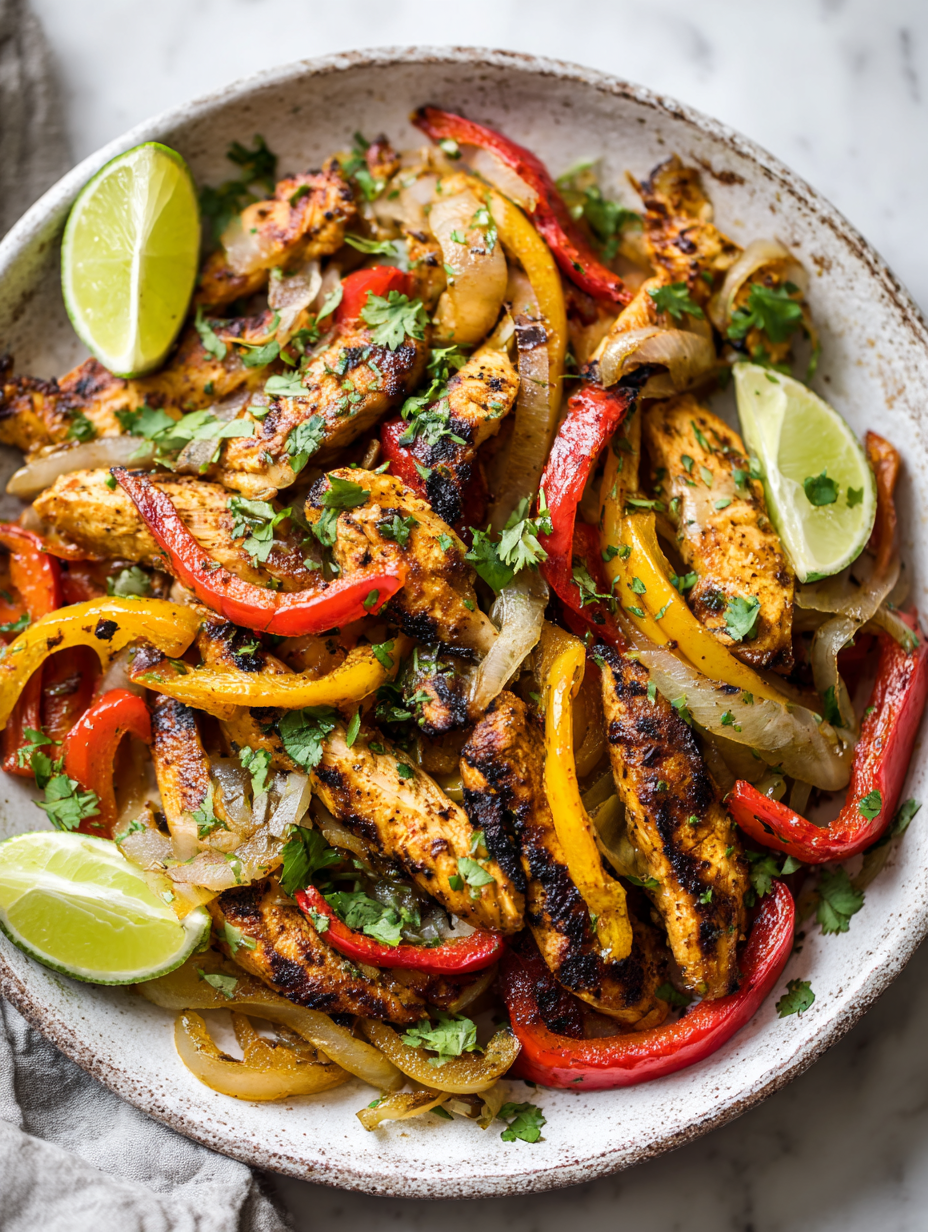
Skillet Chicken Fajitas
Ingredients
Equipment
Method
- Preheat your large skillet over medium-high heat until it shimmers, ready to sear. Gather your sliced chicken, peppers, onion, and seasonings nearby.
- Toss the sliced chicken with a tablespoon of olive oil and sprinkle generously with fajita seasoning, ensuring all pieces are coated evenly. Arrange the seasoned chicken in the hot skillet and let it sear for about 4-5 minutes, stirring occasionally, until it develops a golden-brown crust and is cooked through.
- Once the chicken is browned and cooked, remove it from the skillet and set aside on a plate. Add the sliced peppers and onions to the same skillet. Cook for 5-7 minutes, stirring often, until the vegetables soften, blister, and develop slightly charred edges.
- Return the cooked chicken to the skillet with the peppers and onions. Squeeze the juice of a fresh lime over the mixture, then toss everything together to combine and heat through for another 2 minutes. The mixture should be fragrant, smoky, and vibrant with color.
- Remove the skillet from heat and transfer the fajita mixture onto warm tortillas or serve directly from the skillet. Garnish with sliced avocado or a dollop of sour cream if desired. Serve immediately while hot and smoky.
Notes
Pro tips for perfect fajita skillet
- sear: Preheat your skillet until it shimmers—this gives the chicken and peppers that irresistible char and smoky flavor.
- Quick toss: Keep ingredients moving as they cook—this ensures even searing and prevents burning, especially with peppers and onions.
- Layer flavors: Add lime juice at the end—brightens everything and lifts smoky, savory notes without losing freshness.
- Controlled heat: Keep the skillet hot but not smoking—too hot and the chicken burns before cooking through, too cool and it won’t sear properly.
- Use tongs: Flip and stir with tongs—gives you more control and prevents breaking apart the delicate slices of chicken and peppers.
- Watch the edges: Look for slightly blackened, blistered edges on peppers—this is your cue for that perfect smoky taste.
- Rest briefly: Let the cooked ingredients sit for a minute after removing from heat—this helps juices redistribute and keeps everything tender.
Common mistakes and how to fix them
- OVERCOOKED CHICKEN: Use a thermometer to avoid dryness—juicy at 75°C / 165°F, not beyond.
- DULL PEPPERS: Sear until slightly charred and softened—judge by smoky smell and color change.
- UNDERRIPE VEGGIES: Choose firm, vibrant peppers and onions—overripe ingredients turn mushy too fast.
- SEASONING MISSTEP: Taste and adjust salt and spice at the end—don’t rely solely on initial seasoning.
Quick fixes and pantry swaps
- When chicken is dry, splash with a little lime juice to revive moisture and add brightness.
- If peppers burn quickly, patch with a splash of water and cover to steam off the char slightly.
- Dumped too much oil? Shield the dish with a paper towel and reduce heat before continuing.
- Over-torched peppers? Rescue by removing from heat immediately and tossing in a splash of lime or vinegar.
- When ingredients stick, scrape the pan and add a touch more oil for easier tossing and even searing.
Prep, store, and reheat tips
- Prep the chicken and peppers by slicing them ahead—store in airtight containers in the fridge for up to 2 days. The peppers stay crisp, and the chicken remains juicy when kept cold.
- Season the chicken with the fajita spice mix the night before—this allows flavors to deepen, saving time during cooking and intensifying smoky notes.
- Cook the peppers and onions partially, then cool and refrigerate; finish sautéing just before serving for fresh char and flavor. Reheat in a hot skillet for a brief minute to revive that smoky aroma.
- Store leftovers in an airtight container in the fridge for up to 3 days. The peppers soften more over time, and the flavors mellow slightly, but still tasty.
- Reheat gently over medium heat—add a splash of oil or lime juice to perk up flavors. Expect a softer texture, but the smoky essence and bright notes should still shine through.
Top questions about chicken fajita skillet
1. How hot should the skillet be?
Use a hot skillet—around 200°C / 390°F—so the chicken sears quickly and peppers blister for smoky flavor.
2. How thin should I slice the chicken?
Slice chicken thin, about 1/4-inch, for quick cooking and tender bites—thick slices take longer and can be chewy.
3. When are peppers done?
Cook peppers until they’re soft with slightly charred edges—this gives that smoky, sweet flavor and vibrant color.
4. When should I add lime juice?
Add lime juice at the end—brightens the dish with a citrusy zing and enhances smoky, savory notes.
5. How do I know when chicken is cooked?
Ensure chicken reaches an internal temp of 75°C / 165°F—use a probe thermometer for accuracy and juiciness.
6. Can I use a different pan?
Use a cast iron skillet if possible—retains heat well, giving you that char and smoky flavor even on the stovetop.
7. How do I spice the chicken?
Season chicken generously with cumin, chili powder, and garlic—layering flavors makes the dish rich and smoky.
8. How should I reheat leftovers?
Reheat leftovers in a hot skillet with a splash of lime or water—this revives flavor and keeps ingredients moist.
9. Can I use different peppers?
Use a mix of colorful peppers for visual appeal and balanced sweetness—green, red, yellow all add different flavors and textures.
10. What are signs of overcooking?
Don’t overcook the chicken or peppers—keep a close eye to maintain tender, juicy chicken and smoky peppers.
Cooking this chicken fajita skillet reminds me how simple ingredients can turn into something lively and full of smoky depth. It’s a dish that brings a little chaos and a lot of flavor to the table, perfect for busy nights or whenever I need a quick burst of comfort.
Every time I make it, I feel a bit proud—like I’ve managed to capture that smoky, charred flavor easily at home. It’s a straightforward, honest recipe that always hits the spot and keeps me coming back for more.
