
Stuffed eggs are my secret weapon for turning a humble appetizer into a bold flavor statement. I love experimenting with unexpected ingredients—think spicy harissa, smoky paprika, or tangy pickles—stuffed into tender egg whites. It’s like giving a classic a playful twist, making it perfect for both casual get-togethers and moments when I want to impress without fuss.
These eggs aren’t just pretty; they’re a canvas for all kinds of flavor adventures. I’ve learned that the key is balancing creaminess with punch—adding a little heat, acidity, or umami can totally elevate the dish. It’s surprising how such simple ingredients can become a standout dish that sparks conversations and keeps people coming back for more.
Using stuffed eggs as a canvas for unexpected flavor combos, like spicy harissa or smoky paprika, turns a classic appetizer into a bold, personalized snack.
The story behind this recipe
- This recipe came from a late-night craving for something familiar yet a little different. I was rummaging through my fridge, eyes landing on those last few eggs, and a memory of my grandmother’s kitchen popped up—her stuffed eggs always felt like a little secret, a special treat that was simple yet elegant. I started playing around with different fillings, trying to capture that nostalgic, creamy bite but with a kick of my own.
- What keeps me coming back to this dish is how versatile it feels—each time I make it, I tweak the flavors, sometimes adding a splash of hot sauce or a dash of dill. It’s one of those recipes that feels like a blank canvas, but the core—that silky, perfectly cooked egg white—remains the star. It’s a comfort, a challenge, and a little celebration all in one.
- heading: ‘The story behind this recipe’
Key ingredients and their nuances
- Eggs: I prefer large, farm-fresh eggs. Their yolks are richer, and whites set beautifully. If yours are older, give them an extra minute in boiling water—they peel easier and stay neater when halved.
- Mayonnaise: I use good-quality mayo for creaminess, but Greek yogurt works well if you want tang and less fat. The texture might be a tad lighter, but the flavor stays smooth and rich.
- Dijon Mustard: Adds a subtle heat and depth. If you’re out, a splash of yellow mustard will do, but it’s not quite the same—less punch, more mellow.
- Pickles or Capers: For that briny kick, I love finely chopped cornichons or capers. They add a surprising zing and cut through the richness. Skip if you prefer a milder, creamier filling.
- Herbs & Seasonings: Chives, dill, or parsley—whatever’s fresh. They brighten the filling and add color. If you’re low on herbs, a pinch of smoked paprika gives a subtle smoky warmth.
- Filling Variations: Sometimes I mix in a touch of hot sauce or smoked paprika for a smoky, spicy punch. It’s like a little flavor explosion in each bite—don’t be shy with the seasonings.
- Toppings: A sprinkle of paprika, a tiny dollop of extra mayo, or a few microgreens on top make them look professional. Think of these as the finishing touch that elevates the simple to special.
Spotlight on key ingredients
Eggs:
- I prefer large, farm-fresh eggs. Their whites set beautifully, and the yolks are rich and vibrant. If your eggs are older, give them an extra minute in boiling water—they peel easier and stay neater when halved.
- Mayonnaise: I use good-quality mayo for a creamy filling, but Greek yogurt works well if you want a tangy, lighter option. The texture might be a bit lighter, but the flavor remains smooth and rich.
Dijon Mustard & Briny Additions:
- Dijon Mustard: Adds a subtle heat and depth to the filling. If you’re out, a splash of yellow mustard will do, but it’s not quite the same—less punch, more mellow.
- Pickles or Capers: Finely chopped cornichons or capers give a surprising briny zing, adding a burst of flavor that cuts through the richness. Skip if you prefer a milder, creamier filling.
Notes for ingredient swaps
- Eggs: I prefer farm-fresh eggs with firm whites; if yours are older, add an extra minute boiling for easier peeling.
- Mayonnaise: Use a good-quality mayo for richness; Greek yogurt can be a lighter alternative, though it’s less creamy.
- Dijon Mustard: Adds a subtle heat; if out, yellow mustard works, but it’s milder and less sharp.
- Pickles or Capers: Cornichons or finely chopped capers give a briny punch; skip if you want a milder, creamier filling.
- Herbs & Seasonings: Fresh chives, dill, parsley brighten the filling; substitute with smoked paprika or a pinch of sumac for warmth.
- Filling Variations: Hot sauce or smoked paprika can add smoky, spicy notes; adjust to taste for a flavor boost.
- Toppings: Paprika, microgreens, or extra dollop of mayo on top elevate presentation and flavor.
Equipment & Tools
- Saucepan: To boil the eggs evenly and efficiently.
- Sharp knife: To slice eggs cleanly and precisely.
- Mixing bowl: To mash and blend the yolk filling ingredients.
- Piping bag or plastic bag: To pipe the filling smoothly into the egg whites.
- Paper towels: To dry and handle peeled eggs without slipping.
Step-by-step guide to stuffed eggs
- Gather your equipment: a sharp knife, a small spoon, a piping bag or plastic bag, and a mixing bowl.
- Boil the eggs: Place eggs in a saucepan, cover with water, bring to a boil over medium-high heat (~100°C/212°F).
- Cook for 9-10 minutes: Once boiling, reduce heat slightly, cook eggs until yolks are firm but not chalky. Cool immediately in ice water.
- Peel eggs carefully: Gently tap and peel, aiming to keep whites intact. Pat dry with a paper towel.
- Slice eggs in half lengthwise: Use a sharp knife, cut through the middle to expose yolks. Remove yolks into the bowl.
- Prepare the filling: Mash yolks with mayonnaise, mustard, chopped pickles, herbs, salt, and pepper. Mix until smooth and creamy.
- Pipe or spoon filling: Transfer mixture into a piping bag or plastic bag with the tip cut off. Fill each egg white cavity generously.
- Finish with toppings: Sprinkle with paprika, microgreens, or extra herbs for visual appeal and flavor.
- Rest briefly: Let the stuffed eggs sit in the fridge for 15-20 minutes to meld flavors and firm up slightly.
- Serve: Arrange on a platter, garnish with a few herbs or a drizzle of hot sauce if desired.
Let the stuffed eggs rest in the fridge for 15-20 minutes before serving. Plate them neatly, garnish with herbs or paprika for a pop of color, and serve chilled for best flavor and texture.
How to Know It’s Done
- Egg whites are smooth, not cracked, and hold their shape when sliced.
- Filling is creamy, well-seasoned, and piped neatly without gaps.
- Eggs are fully cooked, yolks firm but not crumbly, with a vibrant yellow hue.
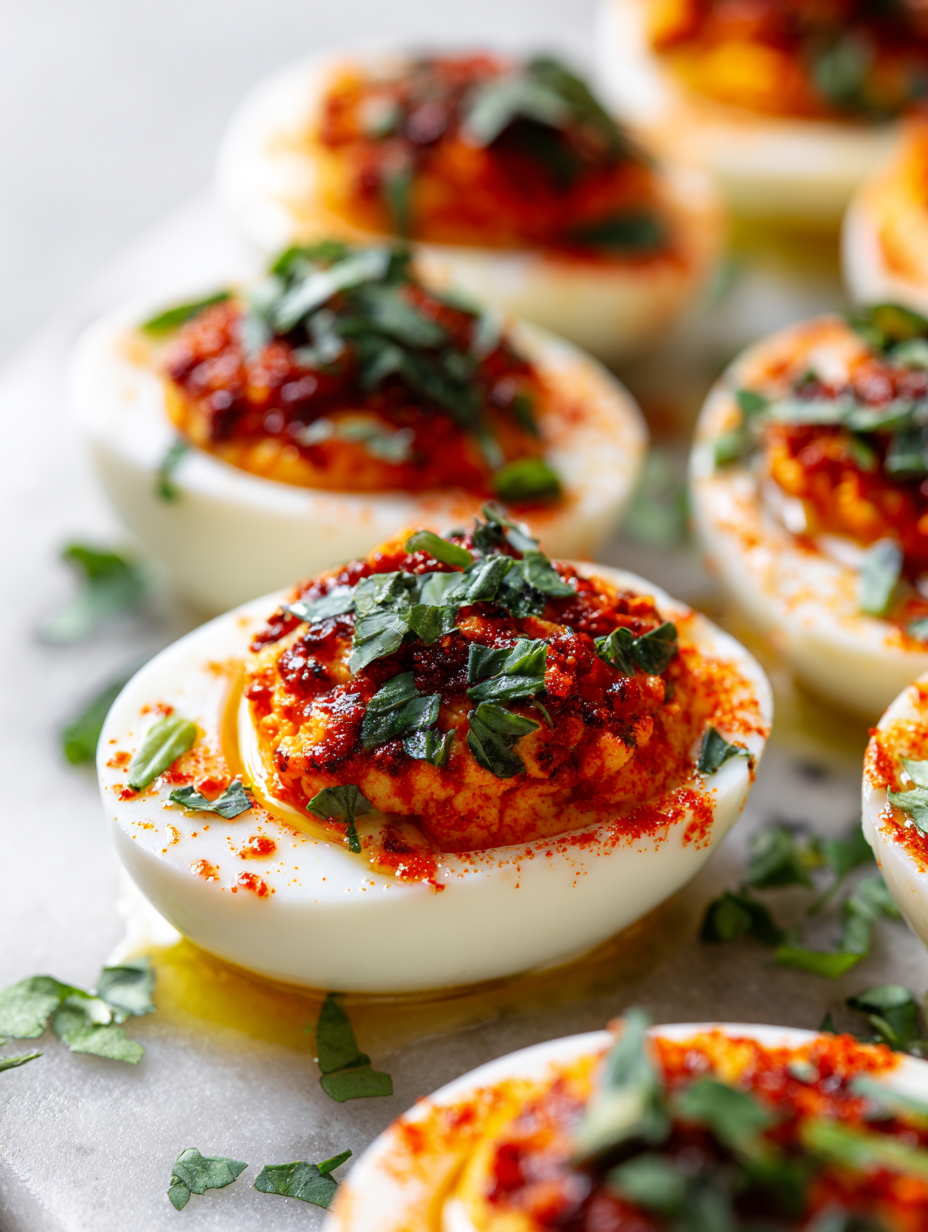
Spicy Harissa Stuffed Eggs
Ingredients
Equipment
Method
- Place the eggs in a saucepan and cover with cold water. Bring to a gentle boil over medium heat, then reduce to a simmer and cook for 9-10 minutes until yolks are firm. Transfer eggs to ice water to cool completely, about 5 minutes.
- Gently tap each egg on the counter to crack the shell, then peel carefully under cold running water to keep whites intact. Pat dry with paper towels.
- Slice each egg in half lengthwise with a sharp knife, and carefully lift out the yolks into a mixing bowl. Arrange the halved whites on a serving platter.
- Mash the yolks with mayonnaise, Dijon mustard, harissa paste, smoked paprika, chopped pickles or capers, and herbs. Season with salt and pepper, then mix until smooth and creamy.
- Transfer the filling into a piping bag fitted with a decorative tip or a plastic sandwich bag with the corner snipped. Pipe the spicy yolk mixture into each egg white cavity, creating a mound that fills the space nicely.
- Sprinkle the filled eggs with a little extra paprika and garnish with microgreens or fresh herbs for a pop of color and flavor.
- Refrigerate the stuffed eggs for 15-20 minutes to allow flavors to meld and the filling to set slightly, making them easier to serve.
- Serve the stuffed eggs chilled or at room temperature, garnished with additional herbs if desired. Enjoy this bold, creamy appetizer that’s perfect for sharing!
Notes
Tips & Tricks for Perfect Stuffed Eggs
- & Fluffy: Use room temperature eggs for easier peeling and a more even cook.
- Color Check: Look for a vibrant yellow yolk and firm whites when eggs are perfectly cooked.
- Taste & Adjust: Before piping, taste the filling and add more salt or acid if needed for balance.
- Piping Precision: Use a piping bag or plastic bag with the tip cut for neat, professional-looking fills.
- Chill to Set: Rest stuffed eggs in the fridge for 15-20 minutes to help flavors meld and filling firm up.
- Avoid Cracks: Gently tap eggs to peel, and peel under cold running water for cleaner whites.
- Season the Topping: Finish with a sprinkle of paprika or herbs right before serving for visual pop.
Common mistakes and how to fix them
- TOO MUCH FILLING: Overstuff eggs, make filling too runny → Use a firmer, thicker mixture.
- MISTAKEN HEAT: Boiling eggs too vigorously → Cook at gentle simmer for even doneness.
- PEELING ISSUES: Peeling eggs when hot or cracking whites → Cool eggs completely in ice water before peeling.
- UNDERSEASONED: Filling lacking salt or acid → Taste and adjust seasoning before piping.
Quick fixes and pantry swaps
- When eggs crack during boiling, splash them into cold water to stop cooking and avoid mess.
- If filling is too runny, pipe quickly or chill mixture for 10 minutes to firm up.
- Dumped too much salt? Rinse the eggs briefly and start over with fresh filling.
- Over-torched the tops? Shield with a tiny bit of extra mayo or herbs for a fresh look.
- Splash hot water on peeling eggs if whites stick—makes peeling smoother and faster.
Prep, store, and reheat tips
- Prepare the filling ahead: Mash yolks and mix with mayo, mustard, and herbs up to 1 day in advance. Keep covered in the fridge; the flavors meld beautifully overnight, making assembly quicker.
- Boiled eggs can be cooked and peeled 1-2 days ahead. Store in an airtight container in the fridge, whites firm and whites still intact when ready to fill.
- Assemble stuffed eggs up to 4 hours before serving. Cover loosely with plastic wrap and keep chilled to prevent drying out or absorbing fridge odors.
- Refrigerate leftovers: Keep stuffed eggs covered in the fridge for up to 24 hours. The texture will stay good, but flavors can dull slightly, so taste and adjust before serving.
- Reheating isn’t necessary—serve cold or at room temperature, but if you want to warm them slightly, reheat in a low oven (around 150°C/300°F) for 5-7 minutes, watching for the whites to stay firm and not dry out.
Top questions about stuffed eggs
1. How do I peel boiled eggs smoothly?
Use eggs that are not too old; fresh eggs peel easier after boiling. Older eggs can be trickier, so add an extra minute to boiling time to help with peeling.
2. What if my filling is too soft?
If your filling is too runny, chill it in the fridge for 10 minutes before piping. This helps it firm up and makes filling neater.
3. Should eggs be cold or room temp before boiling?
Use room temperature eggs for boiling; they cook evenly and peel more easily. Cold eggs can crack or cook unevenly.
4. How can I prevent eggs from cracking during boiling?
Add a pinch of salt or a splash of vinegar to the boiling water to help prevent cracking and make peeling easier.
5. How do I add smoky flavor to stuffed eggs?
For a smoky flavor, add a pinch of smoked paprika or chipotle powder into the filling. It adds depth and a hint of warmth.
6. What if I over-torch the topping?
If the eggs are over-torched and tops turn black, shield with a little mayo or herbs to refresh their appearance.
7. How do I pipe the filling neatly?
Use a piping bag or a plastic sandwich bag with the tip cut for neat, even filling. It makes the presentation look professional.
8. Can I prepare stuffed eggs in advance?
Stuffed eggs can be made a day ahead; keep them covered in the fridge. The flavors meld overnight, and they stay fresh.
9. Can I reheat stuffed eggs?
Reheat if necessary by warming in a low oven (around 150°C/300°F) for 5-7 minutes. Check that whites stay firm and don’t dry out.
10. How do I fix cracked eggs after boiling?
If eggs crack during boiling, run them under cold water immediately after boiling to stop cooking and ease peeling.
Stuffed eggs might seem like a simple appetizer, but they hold a quiet power—bringing comfort and a little spark of creativity to the table. I love how each batch turns into a tiny canvas, waiting for a flavor twist or a pop of color. They’re honest, unpretentious, and somehow always make the moment feel special.
In busy seasons or quiet weekends, these eggs remind me that the best dishes don’t have to be complicated to be memorable. They’re a small, satisfying part of gatherings or quiet nights, quietly delivering flavor and nostalgia with every bite.

Hi, I’m Daniel Whitaker, the voice and recipe developer behind Broth Psychologist. I’m so glad you’re here. This little corner of the internet started as a way for me to share comfort through cooking, but it has grown into something much deeper.
 Hi, I’m Daniel Whitaker, the voice and recipe developer behind Broth Psychologist. I’m so glad you’re here.
This little corner of the internet started as a way for me to share comfort through cooking, but it has grown into something much deeper.
It’s where food meets feeling, and where simple ingredients tell meaningful stories.
Hi, I’m Daniel Whitaker, the voice and recipe developer behind Broth Psychologist. I’m so glad you’re here.
This little corner of the internet started as a way for me to share comfort through cooking, but it has grown into something much deeper.
It’s where food meets feeling, and where simple ingredients tell meaningful stories.


