
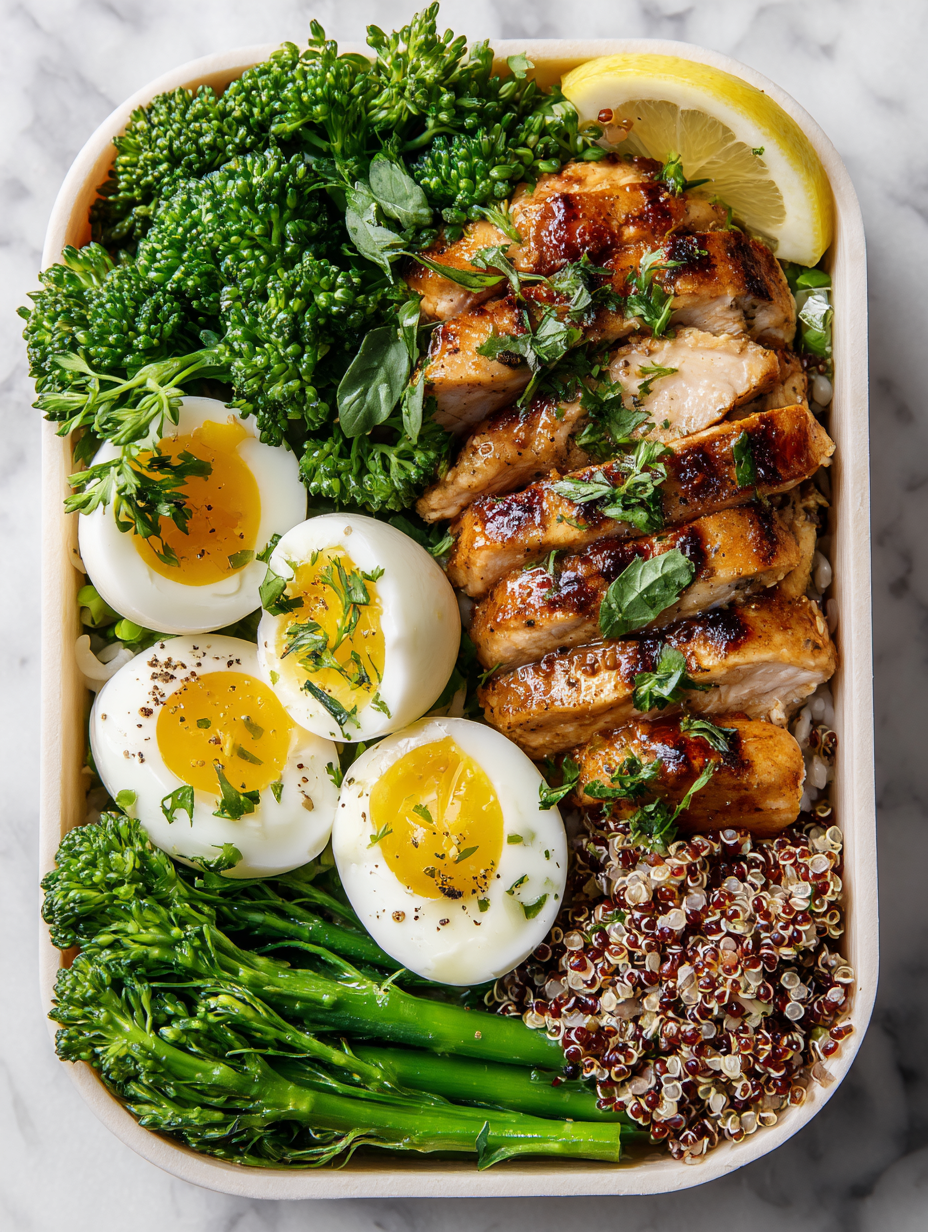
This protein bento box is all about turning a quick lunch into a little feast of textures and flavors. I love how it forces me to think beyond just piling leftovers on a plate—each section has its own little story, from crispy veggies to tender meats. It’s about creating a satisfying, balanced bite every time, even on the busiest days.
What really hooks me is how flexible it is—swap ingredients based on what I have, adjust flavors, or just lean into whatever craving hits. It’s a method as much as a recipe, a way to keep lunch interesting and nourishing without fuss. Plus, it makes me feel a bit more intentional about what I’m eating, which is rare when life gets hectic.
Focusing on the balance of textures and flavors in a protein-packed bento, this recipe emphasizes the importance of variety—crisp vegetables, tender meats, and creamy dips—to turn a simple lunch into a satisfying, almost meditative experience.
The story behind this recipe
- I first started packing bento lunches back when I was working long hours at a small cafe. I got tired of the same sandwiches and wanted something that felt more like a proper meal—more colorful, more varied, and honestly, more fun to assemble. That’s when I began experimenting with different proteins, aiming for a balance that kept each bite interesting.
- One afternoon, I threw together what I thought was a chaotic mix—grilled chicken, roasted chickpeas, some crunchy veg, and a dollop of spicy hummus. When I sat down to eat, I realized how satisfying it was to have all those textures and flavors in one box. It turned a simple lunch into a little ritual that I looked forward to every week.
- heading: The story behind this recipe
Key ingredients at a glance
- Chicken breast: I prefer skinless, boneless chicken—it’s lean and tender when cooked properly. If you want juicier meat, try marinating it overnight in soy and garlic.
- Quinoa: I love how nutty and fluffy it gets, especially when toasted first. Swap with brown rice if you’re after a more neutral base, but you might lose some of that smoky aroma.
- Carrots: Crunchy, bright, and slightly sweet. If you’re out of fresh, roasted carrots work well, just warm them slightly to revive their sweetness.
- Hummus: I use a spicy, smoked version for that oozy, smoky punch. If you prefer mild, go for classic or add a squeeze of lemon for brightness.
- Crispy chickpeas: Roasted with cumin and paprika—these give a satisfying crunch. If you want extra spice, toss with cayenne before roasting, but watch the burn.
- Cucumber: Cool and crisp, it balances the richness. For a twist, try pickled cucumber for added tang and texture.
- Soy sauce or tamari: A splash adds umami and saltiness. If you’re gluten-free, tamari is your friend, just be mindful of the salt level.
Spotlight on key ingredients
Chicken breast:
- I prefer skinless, boneless chicken—it’s lean and tender when cooked properly. If you want juicier meat, try marinating it overnight in soy and garlic.
- Quinoa: I love how nutty and fluffy it gets, especially when toasted first. Swap with brown rice if you’re after a more neutral base, but you might lose some of that smoky aroma.
Chickpeas & Hummus:
- Crispy chickpeas: Roasted with cumin and paprika—these give a satisfying crunch. If you want extra spice, toss with cayenne before roasting, but watch the burn.
- Hummus: I use a spicy, smoked version for that oozy, smoky punch. If you prefer mild, go for classic or add a squeeze of lemon for brightness.
Notes for ingredient swaps
- Protein: Chicken breast is lean and quick-cooking, but turkey or lean pork can work in a pinch, offering similar texture with slightly different flavor notes.
- Grains: Quinoa provides a fluffy, nutty base, but couscous or cauliflower rice can be lighter swaps, though they may alter texture and flavor.
- Vegetables: Carrots add sweetness and crunch—try jicama or radishes for a different crispness and a touch of peppery brightness.
- Hummus: Spicy smoked hummus adds smoky depth, but classic hummus or whipped avocado can bring creaminess and freshness, respectively.
- Chickpeas: Roasted chickpeas are crunchy and savory—baked lentils or toasted pumpkin seeds are good alternatives if you’re after different textures or flavors.
- Cucumber: Keeps it cool and crisp—try zucchini ribbons or jicama for a similar fresh, watery bite with different flavor profiles.
- Soy Sauce: Adds umami and salt—tamari or coconut aminos work well as gluten-free, slightly milder alternatives.
Equipment & Tools
- Medium bowl: for assembling and mixing ingredients
- Sharp knife: for slicing vegetables and chicken
- Skillet or frying pan: for searing chicken
- Meat thermometer: to check chicken internal temperature
- Cutting board: for preparing vegetables and chicken
Step-by-step guide to protein bento
- Gather all ingredients: cooked chicken, cooked quinoa, fresh vegetables, hummus, chickpeas, and condiments. Have a clean workspace ready.
- Prepare equipment: use a medium-sized bowl for mixing, a sharp knife for slicing, and a small saucepan if reheating chicken. Keep utensils within reach.
- Cook the chicken: if not pre-cooked, season breasts with salt, pepper, and a splash of soy sauce. Heat a skillet over medium-high (about 200°C/390°F).
- a. Sear chicken: place in pan, cook 4-5 min per side until golden, internal temp reaches 75°C/165°F. b. Let rest 5 min before slicing thinly. c. If overcooked, add a splash of broth to rehydrate.
- Prepare vegetables: slice cucumbers and carrots into matchsticks, keep crisp. For extra crunch, sprinkle with a pinch of sea salt.
- Assemble the box: lay down a bed of quinoa, arrange chicken slices, add vegetables, and dollop hummus and roasted chickpeas in separate sections. Keep it colorful and balanced.
- Finish with a drizzle of soy or tamari over the chicken and vegetables for umami. Adjust seasoning as needed.
- Rest for 5 minutes: let flavors meld slightly, then cover lightly with plastic wrap if not eating immediately.
- Check for doneness: chicken should be juicy and firm, vegetables crisp, and hummus smooth and creamy. Ensure everything is at room temperature for best taste.
Let the sliced chicken rest for 5 minutes to retain juiciness. Assemble the sections carefully, keeping ingredients separated until serving. Finish with a light drizzle of soy or tamari, then pack or plate immediately.
How to Know It’s Done
- Chicken reaches 75°C (165°F) and juices run clear.
- Vegetables are crisp but not limp or soggy.
- Hummus remains smooth and not cracked or dry.
Protein Bento Box
Ingredients
Equipment
Method
- Start by cooking the quinoa: place it in a saucepan, add 2 cups of water, bring to a boil, then reduce heat and simmer for about 15 minutes until fluffy and tender. Fluff with a fork and set aside.
- While the quinoa cooks, season the chicken breasts with salt, pepper, and a splash of soy sauce. Heat a skillet over medium-high heat and add a little oil.
- Place the chicken in the hot skillet and sear for 4-5 minutes per side, until golden brown and the internal temperature reaches 75°C (165°F). Once cooked, transfer to a plate and let rest for 5 minutes.
- Slice the rested chicken into thin strips. Meanwhile, chop the carrots into matchsticks and slice the cucumber into similar strips for a fresh, crunchy texture.
- Preheat the oven to 200°C (390°F). Toss the drained chickpeas with spices like cumin and paprika, then spread them on a baking sheet. Roast for about 15 minutes until crispy and golden.
- Assemble your bento box by dividing the cooked quinoa into sections, then neatly arranging slices of chicken, crunchy carrots, and cucumber. Add dollops of spicy smoked hummus in a separate section.
- Place the crispy roasted chickpeas into another section of the box, adding a satisfying crunch to each bite.
- Finish by drizzling a small amount of soy sauce or tamari over the chicken and vegetables to enhance the umami flavor.
- Seal the bento box and enjoy immediately, or store in the fridge for up to 2 days, ensuring ingredients stay fresh and crisp.
Pro tips for perfect assembly
- Bolded mini-head: Use a hot pan → Ensures a quick sear with a caramelized crust and locking in juices.
- Bolded mini-head: Season in layers → Salt the chicken early and finish with a splash of soy for depth.
- Bolded mini-head: Toast grains first → Renders a nutty aroma and enhances flavor, making the base more flavorful.
- Bolded mini-head: Chill before slicing → Rest the cooked chicken 5 minutes; it helps retain moisture and makes slicing easier.
- Bolded mini-head: Keep ingredients separate → Prevents sogginess and preserves textures until assembly.
- Bolded mini-head: Use a thermometer → Chicken is perfectly cooked at 75°C/165°F; avoid guesswork and overcooking.
- Bolded mini-head: Pack with care → Arrange ingredients tightly but gently, so everything stays fresh and intact.
Common mistakes and how to fix them
- FORGOT to check chicken temperature → Use a thermometer to avoid undercooking or overcooking.
- DUMPED the seasoning too early → Season meat after searing for better flavor adherence.
- OVER-TORCHED chickpeas → Roast at 200°C/390°F, toss halfway, and watch for crispness without burning.
- MISSED resting time → Rest sliced chicken 5 minutes for juicier, more tender bites.
Quick fixes and pantry swaps
- If chicken is undercooked, splash with hot broth and cover to reheat through.
- When chickpeas are too soft, patch with a quick roast at 200°C/390°F for 5 minutes.
- Splash soy or tamari to balance bland rice or grains that lack depth.
- Patch soggy vegetables with a quick sear in a hot pan to regain crispness.
- Shield delicate ingredients with a paper towel if they shimmer or leak moisture during packing.
Prep, store, and reheat tips
- Cook proteins and grains ahead: store in airtight containers in the fridge for up to 3 days. The flavors deepen overnight, and it saves time in the morning.
- Prep vegetables in advance: wash, slice, and keep in sealed bags for 2-3 days. Their crunch stays crisp if kept dry and separate from moist ingredients.
- Assemble the bento box just before eating: this keeps textures fresh and prevents sogginess, especially for the vegetables and hummus.
- Reheat cooked chicken in the microwave or oven: aim for 30 seconds in the microwave, or 5-7 minutes at 180°C/350°F, until warm and fragrant. Check for even heat and avoid drying out.
- Shelf life: fully assembled bento lasts about 1 day in the fridge. For best flavor, eat within 24 hours, noticing the aroma of seasoned proteins and fresh vegetables.
Top questions about Protein Bento Box
1. Can I prepare the proteins in advance?
Use cooked, cooled proteins like chicken, beef, or tofu. They stay fresh and safe in the fridge for a few days.
2. Can I make this ahead of time?
Yes, you can assemble the bento the night before, but keep vegetables and sauces separate to prevent sogginess.
3. How do I reheat the proteins?
Reheat the cooked proteins in the microwave for about 30 seconds, or until steaming hot, before packing.
4. How long can I store the bento in the fridge?
Use airtight containers for storage. Keep the box in the fridge for up to 2-3 days to maintain freshness.
5. What vegetables work best in this bento?
Fill the box with colorful, crunchy vegetables like carrots and cucumbers to add texture and freshness.
6. Should I season the components before or after storing?
Adjust seasonings like soy sauce or spices after reheating to enhance flavor and avoid oversalting during prep.
7. How can I prevent ingredients from getting soggy?
Use a small container of sauce or hummus on the side to keep everything from getting soggy.
8. Can I make this vegetarian?
For a vegetarian version, substitute with hard-boiled eggs, tempeh, or roasted chickpeas for protein.
9. Which grains are best for a portable bento?
Choose sturdy grains like quinoa or brown rice; avoid delicate greens that wilt easily.
10. What’s the key to a balanced protein bento?
Opt for a variety of textures—crisp vegetables, tender meats, creamy dips—to keep each bite interesting.
This protein bento box is a small act of mindfulness—each component simple but thoughtfully chosen. It’s about making lunch something to look forward to, even on the busiest days. Sometimes, it’s the little routines like this that keep us grounded amidst chaos.
In the end, it’s not just about eating well; it’s about reclaiming a moment of care and attention in a hectic world. That quiet satisfaction of a well-packed box stays with me long after I’ve finished eating.

Hi, I’m Daniel Whitaker, the voice and recipe developer behind Broth Psychologist. I’m so glad you’re here. This little corner of the internet started as a way for me to share comfort through cooking, but it has grown into something much deeper.
 Hi, I’m Daniel Whitaker, the voice and recipe developer behind Broth Psychologist. I’m so glad you’re here.
This little corner of the internet started as a way for me to share comfort through cooking, but it has grown into something much deeper.
It’s where food meets feeling, and where simple ingredients tell meaningful stories.
Hi, I’m Daniel Whitaker, the voice and recipe developer behind Broth Psychologist. I’m so glad you’re here.
This little corner of the internet started as a way for me to share comfort through cooking, but it has grown into something much deeper.
It’s where food meets feeling, and where simple ingredients tell meaningful stories.


