
This chicken cabbage stir fry is my answer to busy weeknights when time feels tight but I still crave something warm and real. I love how the sizzle of the chicken hitting the hot pan and the crisp snap of cabbage can make me slow down for a moment, focusing on the simple pleasure of cooking. It’s honest food, no fuss, just good technique and a handful of ingredients.
There’s something grounding about chopping vegetables and watching everything come together quickly on the stovetop. I’ve made this recipe countless times, and it never gets old — it’s a little chaotic, a little messy, but always satisfying. It reminds me that comfort can be found in even the simplest, most everyday dishes, especially when they’re made with care.
This recipe is inspired by the quiet satisfaction of making a humble, everyday meal that feels like a small victory in the kitchen. I love how the simple act of stir-frying chicken and cabbage can turn into a moment of mindfulness, a chance to slow down and appreciate the textures and flavors that come together with just a handful of ingredients. It’s my go-to when I need a quick, nourishing dinner that doesn’t ask for fancy stuff, just honest technique and a bit of patience.
Finding Joy in Everyday Cooking
- This dish reminds me how satisfying simple ingredients can be when treated with care. The aroma of garlic and soy filling the kitchen takes me back to my childhood dinners.
- Cooking this stir fry is a small act of chaos—chopping, sizzling, flipping—but it always brings a quiet sense of pride when everything comes together hot and fresh.
- I love how the crunch of cabbage and tender chicken create a perfect contrast, making each bite a little celebration of textures, even on the busiest nights.
- Sometimes, I find joy in the mess—spattered soy, burnt edges—and realizing that these little imperfections make the dish truly mine.
The story behind this recipe
- This recipe grew out of a moment of kitchen chaos—me rushing to get dinner on the table after a long day, but still craving something honest and filling. I realized that with a handful of ingredients and a hot pan, I could whip up something that feels both quick and satisfying. It’s a dish I turn to when I want to cook without fuss but still feel like I’ve made something real.
- The idea of combining chicken and cabbage came from those nights when I wanted a meal that’s light but not lacking in flavor, with enough crunch and tenderness to keep me coming back for more. It’s not fancy, but it’s honest, straightforward, and always hits the spot after a hectic day.
- heading
- story_type
Historical & Cultural Roots
- This stir fry style has roots in Chinese home cooking, where quick, flavorful dishes came from necessity and resourcefulness.
- Cabbage was historically a staple in many Asian kitchens because it’s affordable, lasts long, and absorbs flavors beautifully during stir-frying.
- The combination of chicken and cabbage became popular in immigrant communities, blending familiar protein with versatile greens for quick meals.
- In the 20th century, stir-frying gained global popularity, evolving into countless regional variations, yet the core simplicity remains.
Ingredient breakdown: key components
- Chicken breast: I prefer tender, boneless, skinless cuts; the mild flavor really soaks up soy and garlic, making each bite juicy. You can swap with thighs for more flavor, but reduce cooking time slightly.
- Cabbage: I love crunchy, fresh cabbage—sharp and bright on the palate. Use green or Napa depending on your mood; Napa adds a softer, sweeter note, while green stays crisp and bold.
- Garlic: Fresh garlic is non-negotiable for that pungent, aromatic punch. If you need milder flavor, toss in less or smash and remove after cooking for a subtler aroma.
- Soy sauce: I use a good quality, dark soy for depth and a smoky umami hit. Light soy can work, but it’ll be less intense—consider adding a splash of oyster sauce for richness.
- Sesame oil: Just a drizzle at the end — it’s nutty and fragrant, giving the dish a warm glow. If you don’t have it, toasted sesame seeds can add a similar toastiness.
- Vegetable oil: I stick with neutral, heat-stable oil like canola or peanut. If you want a nuttier flavor, go for a splash of toasted sesame oil earlier in cooking, but use sparingly.
- Green onions: They add a fresh, sharp bite and a splash of color. Slice thinly and sprinkle on top right before serving for a vibrant finish.
Spotlight on key ingredients
Chicken breast:
- I prefer tender, boneless, skinless cuts; the mild flavor really soaks up soy and garlic, making each bite juicy. You can swap with thighs for more flavor, but reduce cooking time slightly.
- Cabbage: I love crunchy, fresh cabbage—sharp and bright on the palate. Use green or Napa depending on your mood; Napa adds a softer, sweeter note, while green stays crisp and bold.
Garlic & soy sauce:
- Garlic: Fresh garlic is non-negotiable for that pungent, aromatic punch. If you need milder flavor, toss in less or smash and remove after cooking for a subtler aroma.
- Soy sauce: I use a good quality, dark soy for depth and a smoky umami hit. Light soy can work, but it’ll be less intense—consider adding a splash of oyster sauce for richness.
Notes for ingredient swaps
- Protein: Chicken thighs can be swapped for more flavor and juiciness, but they’ll need a slightly longer cook time. For a leaner option, turkey breast works well too.
- Cabbage: Napa cabbage adds a tender, slightly sweet note, but green cabbage offers a crunch and earthiness. Use what you have for different textures.
- Soy Sauce: Tamari is a gluten-free alternative with richer depth. If you want a milder soy flavor, coconut aminos can replace soy completely.
- Sesame Oil: If you’re out, toasted walnut or peanut oil can add a nutty aroma, but it won’t have quite the same toasty richness.
- Garlic: Fresh garlic is best, but garlic powder can work in a pinch. Use half the amount called for to avoid overpowering the dish.
- Oil: Canola or vegetable oil are neutral choices, but if you want a richer flavor, avocado or toasted sesame oil can elevate the dish.
- Green Onions: Sliced shallots or chives can add a fresh, mild onion flavor if green onions are unavailable.
Equipment & Tools
- Wok or large skillet: To provide high heat and enough space for quick stir-frying.
- Sharp knife: For fast, precise chopping of chicken and cabbage.
- Spatula or tongs: To move ingredients quickly and evenly in the pan.
- Small bowl: For mixing sauce ingredients or holding chopped garlic.
Step-by-step guide to stir-frying
- Equipment & Tools: Gather a wok or large skillet for high heat, a sharp knife for quick chopping, a spatula or tongs for stir-frying, and a small bowl for sauce prep.
- Slice 2 chicken breasts into thin strips, about 1 cm wide. Pat dry and set aside. Preheat your pan over medium-high heat (~200°C/390°F).
- Chop 3 cups of cabbage into bite-sized pieces, about 1-2 cm. Mince 3 cloves garlic finely. Have soy sauce, sesame oil, and a splash of water ready.
- Add 1 tbsp vegetable oil to the hot pan. When shimmering, toss in chicken strips. Cook for 3-4 minutes, stirring until edges are golden and juices run clear. If sticking occurs, add a splash of water.
- Push chicken to one side. Add garlic, cook for 30 seconds until fragrant but not browned. Then add cabbage. Stir vigorously, cook for 2-3 minutes until cabbage is bright green and slightly wilted.
- Pour in 2 tbsp soy sauce and 1 tsp sesame oil. Stir well, cook for another minute until everything is glossy and flavors meld. Taste and adjust soy if needed.
- Step 6a: If the mixture seems dry, add a splash of water and cook for 30 seconds more. If too wet, increase heat slightly to evaporate excess moisture.
- Step 6b: For extra crunch, toss in sliced green onions just before removing from heat. For a smoky flavor, add a dash of smoked paprika or chili flakes.
- Remove from heat. Let sit for 1 minute to allow flavors to settle. Serve hot, straight from the pan, with rice or noodles if desired.
Serve immediately while hot. Garnish with extra green onions or sesame seeds if desired. No need to rest, just plate and enjoy the fresh textures and flavors right away.
How to Know It’s Done
- Chicken is cooked through, juices run clear, and no pink remains.
- Cabbage is vibrant, slightly wilted but still crunchy.
- Sauce is glossy, well-coated, and aroma is savory with garlic and soy.
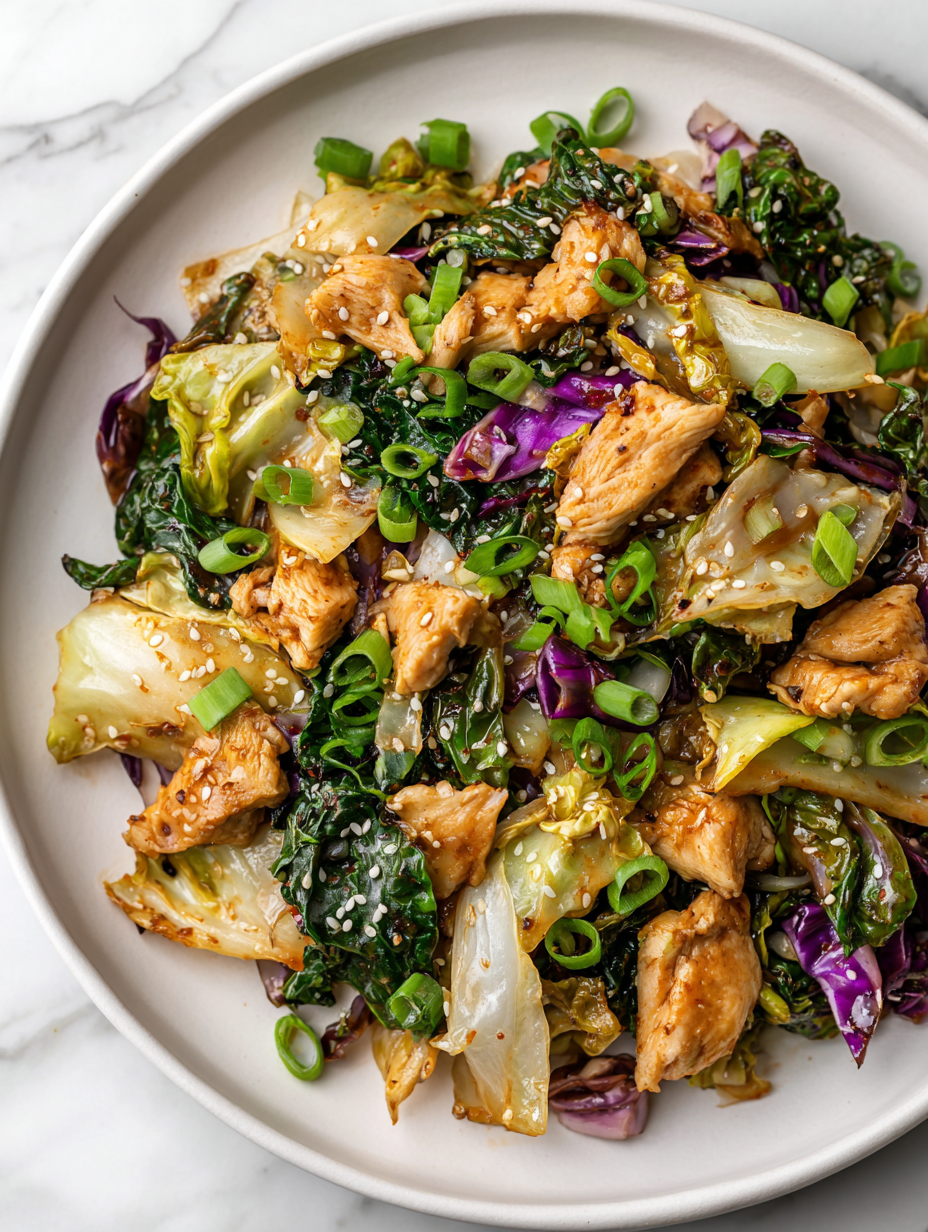
Chicken Cabbage Stir Fry
Ingredients
Equipment
Method
- Start by preheating your wok or large skillet over medium-high heat until it's shimmering hot, which will help everything cook quickly and evenly.
- Add the vegetable oil to the hot pan, swirling to coat the surface. Once the oil shimmers, carefully add the chicken strips in a single layer, letting them sit for a moment until they start to sizzle and develop a light golden color.
- Stir or flip the chicken every 1-2 minutes, cooking for about 3-4 minutes until they are cooked through, tender, and slightly browned on the edges. Remove the chicken from the pan and set aside.
- Reduce the heat slightly and add the minced garlic to the same pan, stirring quickly for about 30 seconds until fragrant and starting to turn golden, but not burnt.
- Add the chopped cabbage to the pan, tossing and stirring vigorously to coat the leaves in the garlic and oil. Cook for 2-3 minutes until the cabbage brightens in color and begins to wilt slightly, still maintaining some crunch.
- Pour in the soy sauce and drizzle the sesame oil over the vegetables and chicken, stirring everything together to coat evenly. Continue cooking for another minute until the mixture is glossy and heated through.
- Return the cooked chicken to the pan, tossing to combine with the cabbage and sauce. Let everything cook together for 1 minute to meld the flavors.
- Remove from heat and sprinkle with sliced green onions for a fresh burst of flavor and color. Serve immediately, straight from the pan, over rice or noodles if desired.
Pro tips for stir-frying success
- Bolded mini-head: Use high heat → Ensures quick sear, keeps chicken juicy, and cabbage crisp.
- Bolded mini-head: Prep ingredients first → Slice and measure everything; stir-frying is about rapid moves.
- Bolded mini-head: Don’t overcrowd the pan → Keeps ingredients from steaming, maintains that crackling sound.
- Bolded mini-head: Add garlic at the right moment → Cook for 30 seconds until fragrant, avoid burnt bitterness.
- Bolded mini-head: Adjust soy for taste → Start with less, then add more; it’s easy to over-salt the dish.
- Bolded mini-head: Finish with sesame oil → Drizzle at the end for aroma and a warm, nutty finish.
- Bolded mini-head: Keep it moving → Constant stirring prevents burning, helps ingredients cook evenly, and builds flavor.
Common mistakes and how to fix them
- FORGOT to heat pan properly → Preheat pan until just smoking before adding ingredients.
- DUMPED too much soy → Use sparingly, taste, then adjust for saltiness.
- OVER-TORCHED garlic → Add garlic later, cook for 30 seconds, then add cabbage.
- MISSED ingredient order → Cook chicken first, then push aside to stir-fry cabbage separately.
Quick fixes and pantry swaps
- When sauce looks too thin → Splash in a cornstarch slurry and simmer for 1 minute.
- If stir-fry is too dry → Patch with a splash of water or broth and toss quickly.
- Splash soy sauce for more flavor → Rescue blandness with a quick splash, then taste and adjust.
- When garlic burns → Shield with a quick toss of cabbage or remove pan from heat for a moment.
- DUMPED too much soy → Fix with a squeeze of lemon or a dash of honey to balance saltiness.
Prep, store, and reheat tips
- Chop the cabbage and garlic the night before; keep refrigerated in an airtight container for up to 24 hours. The sharp crunch and pungent aroma will be fresh for cooking.
- Slice the chicken breasts ahead of time; store in an airtight container for up to 24 hours. Pat dry before stir-frying to prevent excess moisture and splatter.
- Mix the soy sauce, sesame oil, and water in a small jar the day before. Keep in the fridge; the flavors meld nicely after a few hours, ready to pour in.
- Cooked stir fry tastes best fresh, but it can be stored in the fridge for up to 2 days. Reheat gently in a skillet over medium heat, stirring until hot and fragrant.
- For reheating, add a splash of water or broth to loosen the sauce and restore some of the original crackle. Expect slightly softer cabbage but still flavorful.
Top questions about Chicken Cabbage Stir Fry
1. Can I use chicken thighs instead of breasts?
Use boneless, skinless chicken breast for quick cooking and tender bites. Thighs work too, just adjust cooking time.
2. Can I substitute different types of cabbage?
Yes, green cabbage stays crunchy, Napa is softer and slightly sweet. Both are good, choose based on texture you prefer.
3. What’s a good soy sauce substitute?
Use soy sauce for salty umami, but coconut aminos or tamari are good substitutes if you need gluten-free options.
4. When should I add garlic?
Add garlic at the right moment—when fragrant, it’s perfect. Burnt garlic ruins the aroma, so add it later if needed.
5. What temperature should I cook at?
Cook on high heat, around 200°C/390°F, to sear the chicken and crisp the cabbage without steaming.
6. How long can I store leftovers?
Refrigerate leftovers in an airtight container for up to 2 days. Reheat in a skillet until steaming and fragrant, adding a splash of water if needed.
7. What tools do I need?
Use a wok or large skillet to stir-fry. Tongs or a spatula helps move ingredients quickly. A sharp knife speeds up prep.
8. How do I prevent sticking?
Ensure the pan is hot before adding ingredients to prevent sticking and to achieve that nice sear on the chicken.
9. What if it turns out too dry?
If the stir-fry seems dry, add a splash of water or broth and cook briefly to loosen the sauce and rehydrate the vegetables.
10. How do I fix overly salty stir fry?
Taste before adding extra soy or salt. Sometimes a squeeze of lemon brightens the dish and balances salty flavors.
This dish is a testament to how simple ingredients can come together quickly and honestly. It’s a reminder to slow down, even in the chaos of a busy week, and find joy in a stir-fry that’s both satisfying and straightforward.
Cooking this chicken cabbage stir fry feels like an act of mindfulness—crisp cabbage, tender chicken, and that smoky soy aroma. It’s a humble meal that keeps me grounded, especially when I need something nourishing without fuss.

Hi, I’m Daniel Whitaker, the voice and recipe developer behind Broth Psychologist. I’m so glad you’re here. This little corner of the internet started as a way for me to share comfort through cooking, but it has grown into something much deeper.
 Hi, I’m Daniel Whitaker, the voice and recipe developer behind Broth Psychologist. I’m so glad you’re here.
This little corner of the internet started as a way for me to share comfort through cooking, but it has grown into something much deeper.
It’s where food meets feeling, and where simple ingredients tell meaningful stories.
Hi, I’m Daniel Whitaker, the voice and recipe developer behind Broth Psychologist. I’m so glad you’re here.
This little corner of the internet started as a way for me to share comfort through cooking, but it has grown into something much deeper.
It’s where food meets feeling, and where simple ingredients tell meaningful stories.


