
Cooking a chicken stir fry is about more than just throwing ingredients together. It’s a delicate dance of timing, heat, and flavor balance that can turn a simple weeknight meal into something memorable. I’ve learned that the real magic happens when you pay attention to each step, not rushing through or overcomplicating it.
This recipe is my go-to because it’s forgiving and adaptable—perfect for those nights when I want something fast but still crave a dish that feels thoughtful. The key is understanding how to coax the best textures from each ingredient, from the crisp-tender vegetables to the perfectly cooked chicken. It’s not about fancy tools but about paying close attention to what’s happening in the pan.
Honestly, mastering this stir fry taught me to trust the process. When I get the heat right and add ingredients in the right order, the flavors sing—something I used to overlook. It’s a simple dish that demands respect for its rhythm, making every bite a little reminder that good cooking is just about patience and a little attention.
Focusing on the unspoken art of balancing flavors and textures in a chicken stir fry, this recipe emphasizes the importance of timing, heat control, and ingredient harmony, making it a practical guide for home cooks who want to master the subtle craft of stir-frying without fancy equipment.
The subtle art of flavor balance
- Cooking this dish reminded me how a quick stir can turn ordinary ingredients into something vibrant and satisfying.
- I love the chaos of tossing everything in the pan—it’s like a mini performance every time.
- This recipe takes me back to lazy weekend nights when my family gathered around a steaming plate of stir fry.
- There’s a pride in nailing that perfect crispy chicken and tender veggies—like I’ve cracked some homemade secret.
- Honestly, the best part is how forgiving it is; even if I rush, it still tastes like I put real effort into it.
The story behind this recipe
This chicken stir fry came about on a hectic weeknight when I was craving something quick, colorful, and satisfying but didn’t want to drown in sauces or spend ages in the kitchen. I’ve always loved the way stir-fries can turn humble ingredients into something lively and full of flavor with just a few simple steps. Over time, I started paying closer attention to the details—how each ingredient’s texture and timing could make or break the dish. It’s become my go-to for those nights when I want comfort, speed, and a little bit of that lively wok-char aroma.
Historical & Cultural Insights
- The stir-fry technique originated in China over a thousand years ago, emphasizing quick cooking over high heat.
- Early versions used simple ingredients, but modern recipes often incorporate a variety of sauces and vegetables for flavor and color.
- The term ‘stir-fry’ reflects the quick tossing in a wok or pan, a method that preserves freshness and texture.
- Historically, stir-frying was a way to make use of leftover ingredients, transforming them into a new, flavorful dish.
- Today, stir-fry is a global phenomenon, adapting local flavors into this fast, adaptable cooking style.
Key ingredients and tips
- Chicken breast: I pick tender, boneless breasts for juicy bites—cut against the grain for maximum tenderness, and watch that sear turn golden and slightly smoky.
- Bell peppers: I love the sweet, crisp crunch they bring—slice thinly to let them cook quickly and keep their bright color; skip if you prefer a softer texture.
- Soy sauce: I use a good-quality, dark soy for depth—don’t forget to taste and adjust salt; it’s the backbone of that savory umami punch.
- Garlic and ginger: I always crush fresh, watching their aroma explode—mince finely to release maximum flavor, or slice for a milder, more aromatic note.
- Vegetable oil: I prefer a neutral oil with a high smoke point—canola or grapeseed—so it gets hot enough to sizzle without burning, giving that perfect stir-fry shimmer.
- Cornstarch: I mix a teaspoon into the sauce to thicken it—if you want it glossier, double the amount slightly; it adds a velvety finish that coats everything beautifully.
- Green onions: I scatter them last for a fresh, oniony bite—slice thinly on the bias, and make sure they stay crisp for a vibrant pop of color and flavor.
Spotlight on key ingredients
Chicken breast:
- I pick tender, boneless breasts for juicy bites—cut against the grain for maximum tenderness, and watch that sear turn golden and slightly smoky.
- Bell peppers: I love the sweet, crisp crunch they bring—slice thinly to let them cook quickly and keep their bright color; skip if you prefer a softer texture.
Soy sauce and aromatics:
- Soy sauce: I use a good-quality, dark soy for depth—don’t forget to taste and adjust salt; it’s the backbone of that savory umami punch.
- Garlic and ginger: I always crush fresh, watching their aroma explode—mince finely to release maximum flavor, or slice for a milder, more aromatic note.
Notes for ingredient swaps
- Dairy-Free: Swap soy sauce for coconut aminos. It’s milder but keeps that umami punch.
- Gluten-Free: Use tamari instead of soy sauce. Keeps it soy-free without sacrificing flavor.
- Vegetarian: Substitute chicken with firm tofu or tempeh, pressed and sliced. It soaks up sauces beautifully.
- Low-Sodium: Choose a low-sodium soy or tamari. Keep an eye on salt in your sauce mix.
- Sweetener: Replace honey with maple syrup or agave. Adds a different but pleasant sweetness.
- Oil: Use toasted sesame oil for a richer, nuttier aroma—just a splash at the end for flavor.
- Vegetables: Skip bell peppers if you prefer a softer, milder veggie mix—try broccoli or snap peas for crunch.
Equipment & Tools
- Wok or large skillet: Provides high heat and quick tossing
- Spatula: For stirring and flipping ingredients
- Knife: For slicing chicken and vegetables
- Cutting board: Prepping ingredients safely and efficiently
Step-by-step guide to stir-frying
- Equipment & Tools: Gather a wok or large skillet, a spatula, a sharp knife, and a cutting board. The wok is key for high heat and quick tossing.
- Slice 2 chicken breasts into thin strips, about 1 cm wide. Pat dry, then toss with a teaspoon of cornstarch for a light coating. Set aside.
- Prep your vegetables—slice 1 red bell pepper thinly, mince 3 garlic cloves finely, and grate a 1-inch piece of ginger. Keep everything within arm’s reach.
- Heat your wok over high heat until it shimmers (~200°C/392°F). Add 2 tablespoons of vegetable oil, swirling to coat.
- Add chicken strips in a single layer. Cook for 2-3 minutes without moving, until edges turn golden and crispy. Flip and cook another 1-2 minutes. Remove and set aside.
- In the same pan, add a bit more oil if needed. Toss in garlic and ginger, stir for 30 seconds until fragrant—smell that zing!
- Add sliced bell peppers. Stir-fry for 2-3 minutes until they’re slightly blistered but still vibrant and crisp. They should crackle and turn bright.
- Return chicken to pan. Pour in a sauce made of 3 tablespoons soy sauce, 1 teaspoon sesame oil, 1 teaspoon honey, and a splash of water. Stir quickly to coat everything evenly.
- Cook for another 1-2 minutes until the sauce thickens and glazes the ingredients—look for a glossy sheen and a slight sticky feel on the pan.
- Taste and adjust seasoning—add more soy or a splash of rice vinegar if it needs brightness. Toss in chopped green onions at the last second for freshness.
- Resting & Finishing: Serve immediately straight from the pan onto warm plates. Garnish with extra green onions or sesame seeds if you like. No resting needed—just enjoy the sizzle.
Serve immediately while hot, straight from the pan. Garnish with extra green onions or sesame seeds. No resting — just dig in!
How to Know It’s Done
- Chicken is golden and slightly crispy on edges.
- Vegetables are vibrant and still crisp, not soggy.
- Sauce is glossy, slightly thickened, and evenly coats everything.
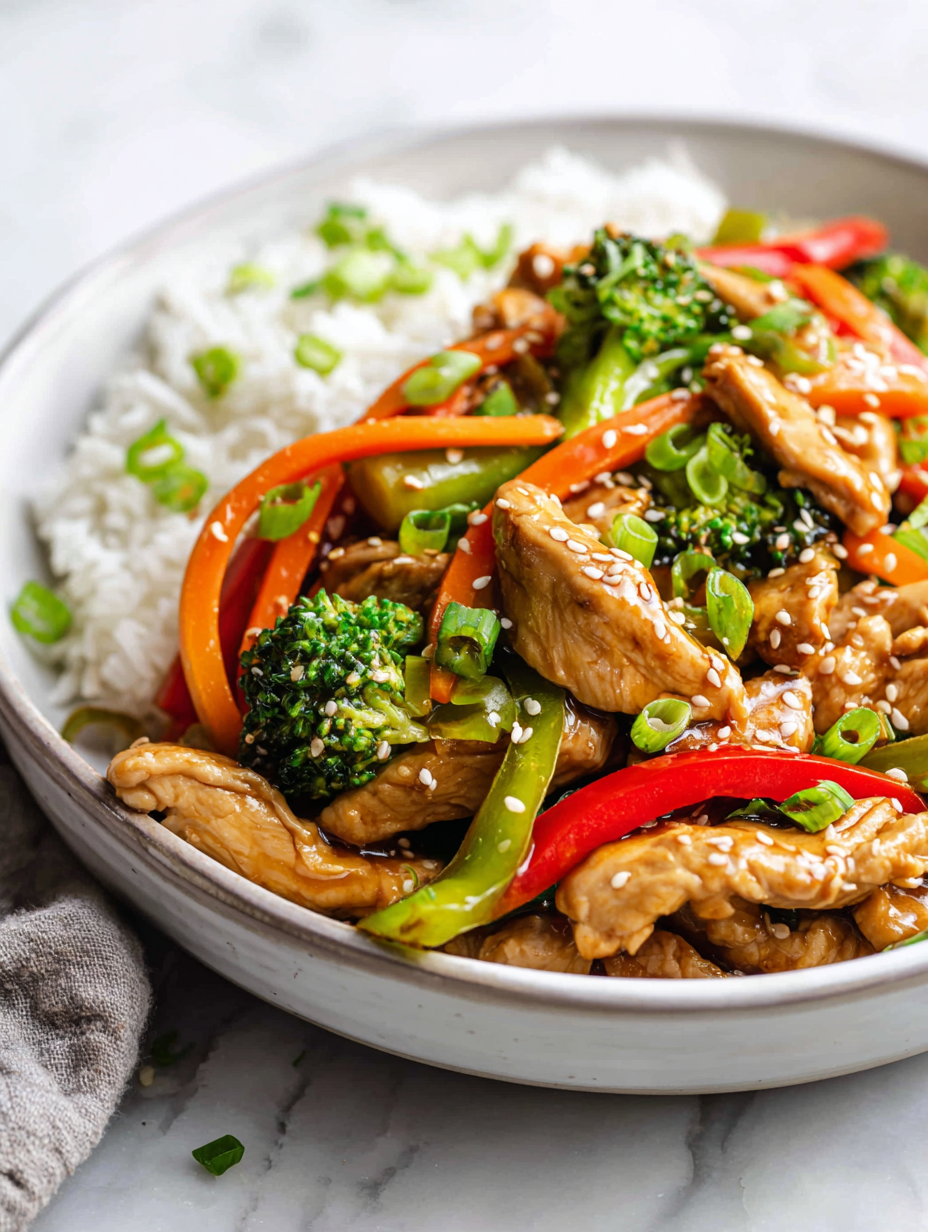
Chicken Stir Fry
Ingredients
Equipment
Method
- Start by slicing the chicken breasts into thin strips, then toss them with a teaspoon of cornstarch if you want a slightly crispy texture. Pat dry and set aside.
- Prepare your vegetables by thinly slicing the bell pepper and mincing the garlic and ginger, placing everything within easy reach for quick cooking.
- Heat your wok or large skillet over high heat until it shimmers, then add the vegetable oil, swirling to coat the bottom evenly.
- Add the chicken strips in a single layer and let them cook undisturbed for 2-3 minutes until the edges turn golden and crispy. Flip and cook another 1-2 minutes until cooked through, then remove and set aside.
- In the same pan, toss in the minced garlic and grated ginger, stirring constantly for about 30 seconds until fragrant and aromatic, filling the air with a zingy scent.
- Add the sliced bell peppers and stir-fry for 2-3 minutes until they’re blistered slightly but still vibrant and crisp, making a satisfying crackle as they cook.
- Return the cooked chicken to the pan, then pour in a sauce made of soy sauce, honey, and sesame oil, stirring quickly to coat everything evenly and create that glossy, flavorful glaze.
- Cook for another 1-2 minutes until the sauce thickens slightly and clings to all the ingredients, giving them a shiny, appetizing appearance.
- Taste the stir fry and adjust the soy or honey if needed for balanced flavor. Garnish with sliced green onions for a fresh, oniony pop.
- Serve immediately straight from the pan while hot, enjoying the vibrant colors, crisp textures, and savory aroma.
Top tips for stir-fry success
- Bolded mini-head: High heat is key → Keep your wok or pan hot enough to make ingredients sizzle immediately, sealing in juices and flavor.
- Bolded mini-head: Don’t overcrowd the pan → Cook in batches if necessary; crowding lowers the temperature and results in steaming, not searing.
- Bolded mini-head: Use aromatics wisely → Add garlic and ginger early, but not so early that they burn; watch for fragrant smell to gauge readiness.
- Bolded mini-head: Timing vegetables → Add quicker-cooking vegetables first, then sturdier ones last to keep textures vibrant but tender.
- Bolded mini-head: Sauce thickening → Pour in sauce gradually, stirring constantly; if it’s too thin, a quick cornstarch slurry will give it a glossy finish.
- Bolded mini-head: Tasting as you go → Adjust soy or salt at the end, tasting frequently to balance saltiness and umami.
- Bolded mini-head: Finish with flair → Toss in green onions or sesame oil last for fresh aroma and a pop of flavor just before serving.
Common mistakes and how to fix them
- FORGOT to preheat the wok → Always heat before adding ingredients for that quick sear.
- DUMPED too much oil → Use just enough to coat the pan; too much makes it greasy.
- OVER-TORCHED the chicken → Cook in batches on high heat; avoid overcrowding to prevent steaming.
- MISSED the sauce consistency → Thicken with a quick cornstarch slurry, stir until glossy and clingy.
Quick fixes and pantry swaps
- When sauce is too thin → Splash in a cornstarch slurry, stir until glossy and thickened.
- If veggies are soggy → Ditch the excess moisture, then increase heat to quickly revive crispness.
- Splash soy sauce when pan is overheated → Reduce heat instantly to prevent burning and bitterness.
- Patch burnt bits → Remove pan from heat, deglaze with a little water or broth to lift flavors.
- Shield delicate ingredients → Push garlic and ginger to the side if they start to burn, then add more oil.
Prep, store, and reheat tips
- Prep all vegetables and chicken slices in advance; store in airtight containers for up to 24 hours. The crispness minimizes slightly, but flavors stay bright.
- Cook the chicken and vegetables separately if preparing ahead; refrigerate in sealed containers for up to 2 days. Reheat quickly in a hot pan to preserve texture.
- Stir-fry sauces can be made ahead and kept in the fridge for 2-3 days. They may intensify in flavor, so taste and adjust before reheating.
- Reheat leftovers in a hot skillet or wok over medium-high heat, stirring frequently. Expect a slight loss of crunch but still flavorful and satisfying.
- Avoid freezing stir-fry leftovers as texture and freshness degrade; if necessary, freeze for no more than 1 month and reheat thoroughly.
Top questions about chicken stir fry
1. Can I use chicken thighs instead?
Use chicken breasts for tender, juicy bites. Slice thinly against the grain for best texture.
2. Should I marinate the chicken beforehand?
Marinate the chicken briefly in soy and a touch of cornstarch for extra flavor and juiciness.
3. Why is my chicken sticking or not searing?
High heat is essential. Preheat your pan until it shimmers to get that quick sear and smoky aroma.
4. What if my vegetables are soggy?
Add vegetables in order of cooking time—harder ones first, delicate ones last—to keep textures vibrant.
5. How do I balance the sauce flavors?
Use soy sauce and a splash of sesame oil for depth. Taste and adjust salt as needed before serving.
6. My stir-fry is watery, what went wrong?
Stir-fry quickly in batches if necessary to avoid overcrowding, which lowers the pan’s temperature.
7. How can I make the sauce thicker?
Thicken the sauce at the end with a cornstarch slurry to give it a glossy, clingy finish.
8. When should I add the garnishes?
Add green onions or sesame seeds right before serving for a fresh, vibrant finish.
9. How long does cooked stir fry last?
Leftovers can be stored in airtight containers for up to 2 days. Reheat quickly in a hot pan for best texture.
10. My stir fry tastes too salty, what can I do?
If the sauce is too salty, dilute with a little water or add a touch of sugar to balance.
This chicken stir fry is more than just a quick dinner; it’s a reminder that simple ingredients, when treated with care, can create something lively and satisfying. The aroma of garlic and ginger, combined with that smoky, slightly charred chicken, makes every bite memorable. It’s a dish that brings back the chaos and joy of real home cooking, even on the busiest nights.
In these hectic times, having a go-to stir fry that’s both forgiving and full of flavor feels like a small victory. It’s a dish that encourages experimentation—more veggies, different sauces, whatever’s in the fridge. And honestly, once you get the rhythm right, it’s hard to go back to takeout when you can whip this up in minutes with your own hands.

Hi, I’m Daniel Whitaker, the voice and recipe developer behind Broth Psychologist. I’m so glad you’re here. This little corner of the internet started as a way for me to share comfort through cooking, but it has grown into something much deeper.
 Hi, I’m Daniel Whitaker, the voice and recipe developer behind Broth Psychologist. I’m so glad you’re here.
This little corner of the internet started as a way for me to share comfort through cooking, but it has grown into something much deeper.
It’s where food meets feeling, and where simple ingredients tell meaningful stories.
Hi, I’m Daniel Whitaker, the voice and recipe developer behind Broth Psychologist. I’m so glad you’re here.
This little corner of the internet started as a way for me to share comfort through cooking, but it has grown into something much deeper.
It’s where food meets feeling, and where simple ingredients tell meaningful stories.


