
Focusing on the caramelization process, I want to show how patience with slow, gentle cooking transforms humble onions into a rich, sweet base. It’s about appreciating the small, almost meditative moments that build flavor, turning simple ingredients into something deeply satisfying. For me, this approach makes the soup a ritual, a quiet act of love in the kitchen.
There’s something almost hypnotic about watching onions slowly brown and soften, releasing their natural sugars. It’s a process that demands attention and time, but the payoff is a depth of flavor that can’t be rushed. This soup isn’t just about eating; it’s about honoring those small, slow moments that make cooking meaningful.
Focusing on the caramelization process, I want to show how patience with slow, gentle cooking transforms humble onions into a rich, sweet base. It’s about appreciating the small, almost meditative moments that build flavor, turning simple ingredients into something deeply satisfying. For me, this approach makes the soup a ritual, a quiet act of love in the kitchen.
The meditative act of caramelizing
- Cooking this soup reminds me of my grandmother’s kitchen, where the smell of caramelized onions filled the air and made everything feel cozy.
- There’s a quiet pride in making a perfect, deeply flavored broth—it’s a small victory every time I get that perfect balance of sweetness and salt.
- On especially hectic days, the act of slow-cooking onions feels like a meditative escape, turning chaos into something warm and comforting.
- Sharing this soup with friends sparks nostalgia—watching their faces light up at that first spoonful makes all the effort worth it.
- The caramelization process can be unpredictable, but when it finally turns that deep amber, I feel a wave of relief and satisfaction.
The story behind this recipe
- Making this soup reminds me of a winter trip to Paris, where I first tasted a bowl that was so deeply savory, it stayed with me for days. The slow caramelization of onions, the bubbling cheese topping—those small moments of patience felt like a quiet celebration of simple ingredients.
- Every time I cook it, I recall that chilly evening walking through cobbled streets, the air smelling of roasted garlic and toasted bread. It’s funny how a bowl of soup can carry such a memory, anchoring me back to that cozy, distant place.
Historical and Cultural Notes
- French Onion Soup dates back to Roman times, where ancient recipes used simple ingredients like onions and broth to create hearty, rustic fare.
- The dish gained popularity in France during the 18th century, especially among peasants, as onions were affordable and readily available.
- Traditionally, the caramelization of onions was a slow process, often taking up to an hour, which was seen as a meditative act of patience.
- The cheese topping, typically Gruyère or Comté, became characteristic of the dish in the 19th century, adding a rich, nutty flavor.
- In some regions, a splash of cognac or sherry is added for depth, a practice dating back to French culinary traditions of enhancing flavor.
Key Ingredients and Tips
- Yellow onions: I favor sweet onions for their natural caramelization, but yellow works well; aim for a soft, golden hue that releases a sweet, inviting aroma.
- Beef or vegetable broth: I use homemade whenever I can—richer and more complex—but store-bought works; look for low sodium so you can control the salt balance.
- Butter: I stick with unsalted butter for that creamy, mellow base—if you want a dairy-free version, coconut oil adds a subtle sweetness and richness.
- Dry white wine: I love a splash of dry wine to deepen the flavor—skip it if you prefer, but it brightens the sweetness of the onions.
- Thyme: Fresh thyme adds a herbaceous note that complements the sweetness—dried thyme is fine, but use less as it’s more concentrated.
- Baguette slices: I toast these until golden and crispy—skip the toasting if you want softer bread, but it won’t have that satisfying crunch.
- Gruyère cheese: I love the nutty, gooey melt—Swiss or Emmental are good swaps, but avoid processed cheeses for authenticity.
Spotlight on key ingredients
Onions:
- Yellow onions: I prefer sweet onions for their natural caramelization; aim for a soft, golden hue and a fragrant, sweet aroma that develops slowly.
- Beef or vegetable broth: I use homemade broth for depth, but store-bought works; look for low sodium options to better control seasoning.
Cheese & Bread:
- Gruyère cheese: I love its nutty, melting quality—watch it bubble and brown until bubbly and crispy, creating that irresistible crust.
- Bread (baguette slices): I toast these until golden and crispy, which provides that satisfying crunch and helps hold the cheese melt without sogginess.
Ingredient Swap Tips
- Dairy-Free: Use plant-based cheese and butter alternatives. Expect a slightly different melt and flavor, but still satisfying.
- Vegan Broth: Swap in mushroom or vegetable broth. Adds umami depth, but might lack the richness of beef broth.
- Onion Varieties: Sweet onions like Vidalia are ideal for caramelization, but yellow onions are a good, more neutral substitute.
- Wine Options: Dry sherry or apple cider vinegar diluted with water can replace white wine. Adds acidity, but less fruity aroma.
- Herb Tweaks: Fresh thyme is classic, but dried thyme works in a pinch—use half as much to avoid overpowering.
- Bread Choices: Baguette is traditional, but sourdough or rustic country bread can add a different tang and texture.
- Cheese Alternatives: Gruyère is traditional, but Swiss or Emmental can mimic the nutty, gooey melt. Skip processed cheeses.
Equipment & Tools
- Wide sauté pan: For even caramelization of onions.
- Wooden spoon: To stir onions gently and prevent sticking.
- Sharp knife: To slice onions thinly and evenly.
- Baking sheet: To toast bread slices evenly.
- Ovenproof bowls: To serve and broil the finished soup.
- Broiler or oven with grill setting: To melt and brown cheese topping.
Step-by-step guide to French Onion Soup
- Equipment & Tools: Use a wide, heavy-bottomed sauté pan for even heat distribution, a wooden spoon for stirring, and a knife for slicing. A baking sheet is handy for toasting bread slices, and a ladle helps serve the soup.
- Prepare onions: Peel and thinly slice 4 large yellow onions. Keep them consistent in size for even caramelization.
- Caramelize onions: Heat 2 tbsp butter and 1 tbsp olive oil over medium-low (about 150°C/300°F). Add onions and a pinch of salt. Cook slowly, stirring every 8-10 minutes, until deep golden brown, about 45-60 minutes. Watch for a rich, sweet aroma and dark amber color.
- Deglaze pan: Pour in ½ cup dry white wine, scraping up browned bits. Let it reduce by half, about 3-4 minutes, until fragrant and slightly syrupy.
- Add broth & herbs: Stir in 4 cups beef or vegetable broth, a sprig of fresh thyme, and a bay leaf. Bring to a gentle simmer, cook for 20 minutes, allowing flavors to meld. Skim off any foam or impurities.
- Season & adjust: Remove thyme and bay leaf. Taste and add salt or pepper as needed. If too thick, thin with a splash more broth; if too thin, simmer uncovered for 5-10 minutes.
- Prepare bread: While soup simmers, slice a baguette into ½-inch rounds. Toast on a baking sheet at 180°C/350°F until golden and crispy, about 10 minutes.
- Finish with cheese: Ladle soup into ovenproof bowls. Top with toasted bread slices and generously sprinkle grated Gruyère cheese on top. Place bowls under a broiler (about 200°C/390°F) until cheese bubbles and browns, 2-4 minutes. Watch carefully to prevent burning.
- Rest & serve: Carefully remove from oven, let sit for 2 minutes. Serve hot, garnished with a little fresh thyme if desired.
Let bowls rest for 2 minutes after broiling. Serve with a spoon, ensuring the cheese is gooey and the broth is steaming hot. Garnish with extra thyme if desired.
How to Know It’s Done
- Onions are deeply caramelized with a rich, sweet aroma and dark amber hue.
- Broth is simmered and flavors melded, with no raw onion smell remaining.
- Cheese is bubbly, golden, and slightly browned, with a crispy crust on the bread.
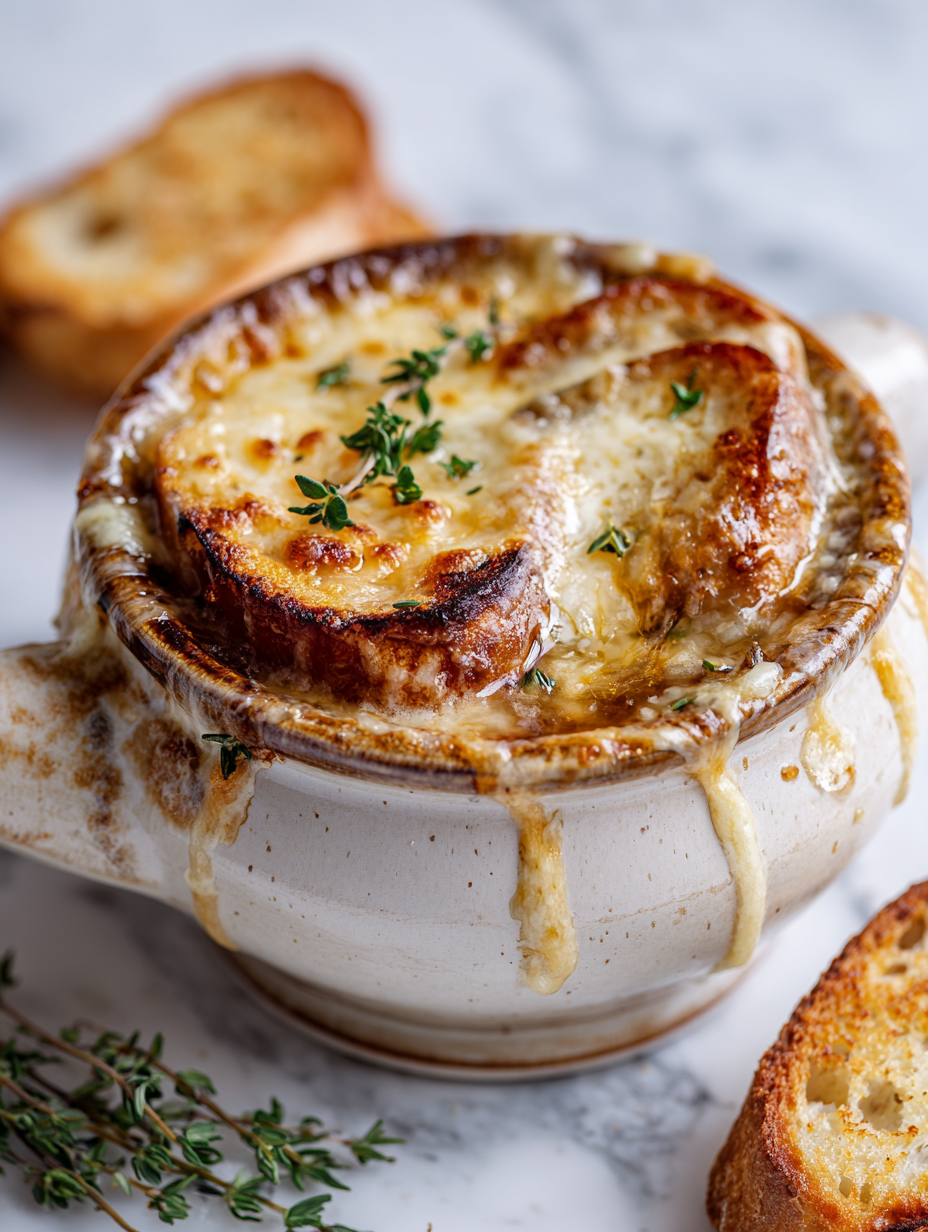
French Onion Soup
Ingredients
Equipment
Method
- Peel and thinly slice the onions, keeping the slices consistent for even caramelization.
- Heat a wide, heavy-bottomed sauté pan over medium-low heat and add the butter and olive oil. Once melted and fragrant, add the sliced onions and a pinch of salt.
- Cook the onions slowly, stirring every 8-10 minutes, until they turn a deep golden brown and smell sweet, about 45-60 minutes. The onions will become soft, fragrant, and dark amber in color.
- Pour in the white wine to deglaze the pan, scraping up any browned bits from the bottom. Let the wine reduce by half, about 3-4 minutes, until the mixture is fragrant and slightly syrupy.
- Add the broth, thyme sprig, and bay leaf to the pan. Bring to a gentle simmer and cook uncovered for 20 minutes, allowing the flavors to meld and intensify. Skim off any foam or impurities that rise to the surface.
- Remove the thyme sprig and bay leaf. Taste the soup and season with salt and pepper as needed.
- While the soup simmers, slice the baguette into ½-inch rounds and toast them on a baking sheet at 180°C (350°F) until golden and crispy, about 10 minutes.
- Preheat the broiler or oven grill. Ladle the hot soup into ovenproof bowls, then top each with a toasted baguette slice and a generous sprinkle of grated Gruyère cheese.
- Place the bowls under the broiler until the cheese bubbles and turns golden brown, about 2-4 minutes. Keep a close eye to prevent burning.
- Carefully remove the bowls from the oven and let rest for 2 minutes. Serve hot, garnished with a little extra thyme if desired.
Pro Tips for Perfect Onion Soup
- Slow caramelization: Keep the heat low; onions release their sweetness gradually, developing a rich, honeyed aroma.
- Use a wide pan: A broad surface allows onions to cook evenly and promotes faster, more consistent browning.
- Deglaze generously: Scrape up browned bits with wine or broth—these bits add concentrated flavor and depth.
- Watch for color: Aim for a deep amber hue—too light and the sweetness isn’t developed enough; too dark and it might taste burnt.
- Layer flavors: Add a splash of wine early on to boost sweetness and complexity—don’t skip this step.
- Broil with care: Cheese should bubble and turn golden, not burn—keep a close eye during the final broil.
- Taste before serving: Adjust salt and acidity at the end—onions and broth can vary, and balance makes all the difference.
Common mistakes and how to fix them
- FORGOT to adjust heat; onions may burn or stick. Use medium-low for slow caramelization.
- DUMPED in too much sugar; it can burn or taste off. Stick to natural sugars in onions.
- OVER-TORCHED cheese; it burns quickly. Broil until bubbly and golden, watch closely.
- FAILED to deglaze properly; leaving bits behind. Scrape and cook off alcohol for flavor.
Quick Fixes and Pantry Swaps
- If onions aren’t browning, turn down the heat and extend cooking time.
- Splash cold water into the pan to stop burning if onions start to over-tan.
- Patch a burnt cheese top with fresh cheese, then broil briefly again for a fresh look.
- Shield the soup with foil if the cheese browns too quickly under the broiler.
- Ditch overly salty broth with a splash of water or add a peeled potato for quick salt absorption.
Prep, store, and reheat tips
- Caramelized onions can be prepared up to 2 days in advance; store in an airtight container in the fridge, where they’ll develop a deeper sweetness and mellow aroma.
- Soup base can be made a day ahead; cool completely, then refrigerate for up to 24 hours. Reheat gently on the stove, stirring occasionally until steaming and fragrant.
- To maximize flavor, let the soup sit for 15-20 minutes after reheating—this helps meld the flavors and reduces any raw onion smell.
- Keep toasted bread and cheese separate until ready to serve. Toasted bread can be stored in a paper bag for a day; re-crisp in a 180°C (350°F) oven for 5-7 minutes.
- Reheat soup in a saucepan over low-medium heat, about 5-7 minutes, until hot and bubbling. Check for seasoning and adjust salt or acidity if needed.
- For longer storage, freeze soup in portions for up to 3 months. Thaw in the fridge overnight, then reheat on low with a splash of broth or water to loosen.
Top questions about French Onion Soup
1. How do I get perfectly caramelized onions?
Use a wide, heavy-bottomed pan for even caramelization. Stir gently and low and slow for best flavor.
2. What cheese should I use on top?
Choose a good melting cheese like Gruyère or Emmental. Broil until bubbly and golden for that irresistible crust.
3. Can I use vegetable broth instead of beef?
Use low-sodium broth to control salt. Simmer the soup gently and taste before seasoning further.
4. Should I toast the bread before adding it to the soup?
Toast the bread slices until crispy. Place on top of hot soup before broiling for the ideal crunch.
5. Why add wine to onion soup?
Deglaze with white wine early in cooking to add depth. Let it reduce for a richer flavor.
6. How do I reheat leftover soup without ruining it?
Reheat gently on the stove over low heat, stirring occasionally until steaming hot. Add a splash of broth if thick.
7. How long does caramelizing onions take?
Caramelize onions slowly over low heat, aiming for a deep amber color and sweet aroma, about 45-60 minutes.
8. How do I deglaze the pan properly?
Use a spoon to scrape up browned bits when deglazing; these add concentrated flavor and richness.
9. When should I add herbs?
Add fresh thyme towards the end of simmering for a fragrant, herbaceous note that complements the sweetness.
10. What if the cheese burns during broiling?
If cheese burns, cover the bowl with foil and broil briefly again. Keep a close eye to prevent over-browning.
This soup, with its deep caramelized flavors and bubbly cheesy topping, feels like a small ritual in a busy week. It’s honest, straightforward, and rooted in tradition, but made with a little personal touch that makes each bowl special.
Sharing this dish reminds me that good things come from patience and a bit of gentle attention. It’s not just a meal; it’s a quiet celebration of simple ingredients turned into something warm and memorable.

Hi, I’m Daniel Whitaker, the voice and recipe developer behind Broth Psychologist. I’m so glad you’re here. This little corner of the internet started as a way for me to share comfort through cooking, but it has grown into something much deeper.
 Hi, I’m Daniel Whitaker, the voice and recipe developer behind Broth Psychologist. I’m so glad you’re here.
This little corner of the internet started as a way for me to share comfort through cooking, but it has grown into something much deeper.
It’s where food meets feeling, and where simple ingredients tell meaningful stories.
Hi, I’m Daniel Whitaker, the voice and recipe developer behind Broth Psychologist. I’m so glad you’re here.
This little corner of the internet started as a way for me to share comfort through cooking, but it has grown into something much deeper.
It’s where food meets feeling, and where simple ingredients tell meaningful stories.


